
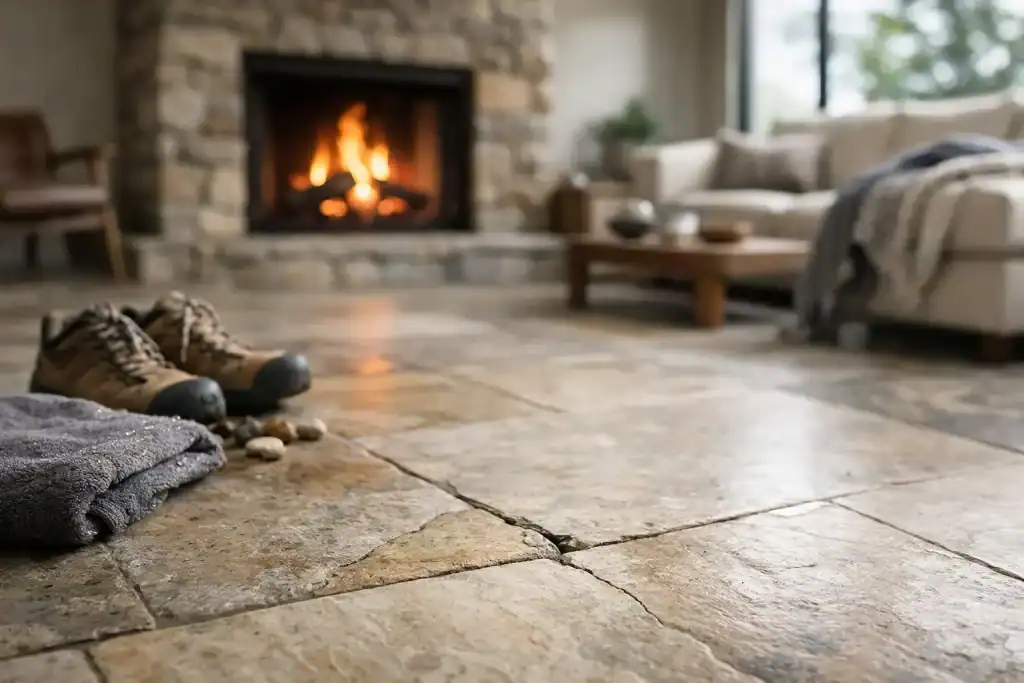
A pale limestone floor warmed by afternoon light, a textured granite path through the garden, a marble ensuite that feels quietly composed – natural stone earns its place through more than appearance. But are natural stone tiles durable enough for busy households, wet areas and exposed outdoor spaces? Yes, when the stone, finish and installation are selected for the conditions they will face.
Natural stone is not one uniform material. It is a family of materials formed over time, each with its own density, porosity, mineral makeup and character. The right choice can perform beautifully for decades. The wrong choice, or the right stone used in the wrong location, can lead to staining, surface wear or unnecessary maintenance.
Are Natural Stone Tiles Durable in Everyday Spaces?
Durability begins with the particular stone rather than the category name. Dense igneous stones such as granite are exceptionally hard-wearing and well suited to high-traffic floors, exterior paving and areas where abrasion is expected. Travertine, limestone and sandstone bring a softer, more relaxed character and can be highly durable too, but their performance depends more heavily on grade, finish, sealing and considered placement.
Marble is durable in the structural sense, having been used in architecture for centuries, yet it asks for a more accepting approach to patina. Polished marble can etch when acidic liquids such as lemon juice, wine or certain cleaners touch its surface. That is not a failure of the material. It is a natural reaction that should inform where and how it is used. A honed marble floor in a powder room may be an elegant choice; a polished marble benchtop in a hard-working family kitchen may require more care than some households want to give.
For floors, stone’s thickness and correct installation add to its strength. A properly prepared substrate, appropriate adhesive, sound movement joints and professional grouting matter as much as the tile itself. Even the toughest stone can crack if it is laid over a substrate that moves or drains poorly.
What Determines Natural Stone Tile Performance?
A stone tile’s long-term performance is shaped by several connected decisions.
Density and porosity
Porosity describes how readily a stone absorbs moisture. More porous stones can still be excellent for floors and walls, but they generally benefit from a quality penetrating sealer. Sealing does not make stone invincible or turn it into a plastic-like surface. It slows the absorption of water and spills, giving you time to clean them away before they settle into the material.
This distinction is particularly relevant around kitchens, bathrooms and entertaining areas. A honed limestone or travertine can be a very practical surface when it is sealed and maintained correctly. It simply needs care that respects its natural composition.
Surface finish
Finish affects both appearance and grip. Honed stone has a smooth, matte look that feels understated and is often more forgiving of everyday marks than highly polished stone. Tumbled and brushed finishes bring texture, making them popular for relaxed indoor-outdoor settings.
For exterior areas, particularly around pools, a finish with suitable slip resistance is essential. The visual appeal of a stone is only part of the brief. Bare feet, splashing water, sunscreen and Queensland summer rain all need to be considered. A tactile finish can make a pool surround safer while preserving the natural movement and variation that make stone compelling.
Location and exposure
Stone used inside a low-traffic bedroom has a different task from stone laid on a sunny terrace or beside a saltwater pool. Outdoor tiles need to handle ultraviolet exposure, heat, rain and changing temperatures. In coastal locations, salt and wind-borne contaminants can also affect maintenance requirements.
This does not mean outdoor stone needs to look utilitarian. It means the selection should be specific. Dense stones and appropriate finishes are often favoured for driveways, paths and highly exposed entertaining areas, while certain limestones and travertines can create exceptional poolscapes when selected in a suitable grade and installed with correct drainage.
Installation and drainage
Water is often the real test of an outdoor surface. Poor falls, inadequate drainage or water sitting beneath pavers can create problems that no sealer can solve. Exterior natural stone should be planned as part of a complete landscape system, including the base, drainage, expansion allowances and adjoining materials.
For pool coping, the edge detail matters as well. A well-chosen coping profile can improve comfort, support water management and create a more resolved connection between pool, paving and garden.
Where Natural Stone Works Best
Natural stone offers broad design flexibility because different materials suit different roles. Granite and selected dense bluestones can handle demanding exterior applications with confidence. Sandstone brings warmth and texture to paths, retaining walls and garden spaces. Travertine remains a sought-after choice for pool surrounds because of its soft palette, comfortable feel underfoot and classic outdoor character. Limestone can deliver a calm, architectural finish across internal floors, bathrooms and alfresco zones.
The key is not to choose solely from a sample in isolation. Consider the whole setting: the home’s orientation, the amount of direct sun, expected foot traffic, whether pets and children will use the area, and the level of maintenance you consider realistic. A pale stone may reduce heat underfoot in an exposed entertaining area, while a darker, denser option may be better suited to a frequently used entry or driveway.
Natural variation should also be expected, not treated as a defect. Veining, fossil marks, shade shifts and surface movement are part of authentic stone. They create depth that manufactured finishes often try to replicate. Ordering enough material to allow for selection and layout gives the installer room to balance colour and movement across the finished surface.
Care That Preserves the Finish
Natural stone does not need complicated daily treatment. It benefits from consistent, sensible care. Sweep or vacuum grit from floors so it does not act like sandpaper underfoot. Wipe spills promptly, especially oils, wine, coffee and acidic ingredients. For regular cleaning, use a pH-neutral product made for natural stone rather than acidic or harsh household cleaners.
Avoid vinegar, bleach-based products and abrasive powders unless a stone-care professional has specifically advised their use. These can dull finishes, damage sealers or react with calcium-based stones such as marble, limestone and travertine.
Sealer maintenance is not fixed to a calendar because it depends on the stone, product, traffic levels and exposure. As a practical guide, monitor how water behaves on the surface. If it darkens the stone immediately rather than beading briefly, it may be time to assess whether resealing is needed. Outdoor surfaces may also require periodic cleaning to remove organic growth, leaf tannins and accumulated dirt.
The Trade-Off: Durability Versus a Perfect Surface
Some clients want a surface that remains visually unchanged with minimal effort. Others are drawn to materials that acquire softness and character through use. Natural stone can satisfy either preference, but the material and finish need to match the expectation.
If easy maintenance is the priority, choose a dense stone with a practical finish and use it in an appropriate location. If the appeal lies in the lived-in elegance of honed marble or limestone, accept that small marks and tonal changes may become part of the story. Neither approach is more refined. What matters is making the decision consciously before the project begins.
For renovations and new builds across Brisbane, the Gold Coast, Sunshine Coast and Northern Rivers, climate should be part of that conversation. Strong sun, heavy rainfall and indoor-outdoor living call for surfaces chosen with genuine local conditions in mind, not only a visual reference image.
A Material Chosen for the Long Term
Natural stone tiles are durable when their natural strengths are respected. Select for the setting, specify the finish with safety and use in mind, invest in proper installation, and maintain the surface with straightforward care. The result is not merely a floor or wall finish, but a material with presence – one that connects interiors, pools and landscapes through the enduring character of the earth.
The best stone choice is the one that feels right underfoot, works hard where it needs to, and will still belong in the home as the years add their own layer of life.