
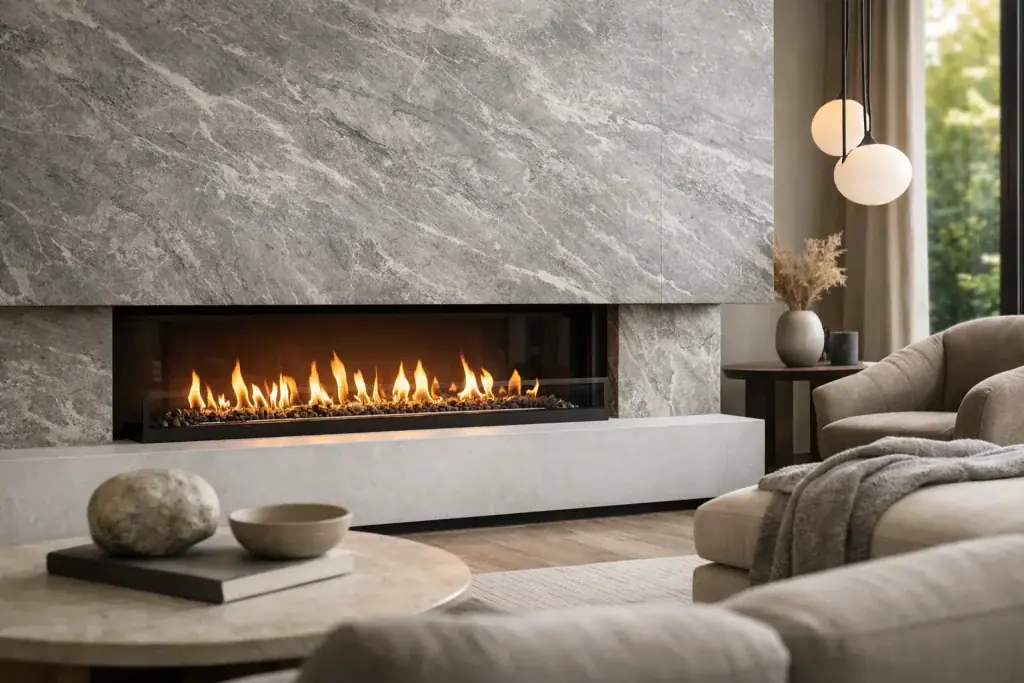
A fire can change the character of a room long before it changes the temperature. This bioethanol fireplace review considers the detail that matters in a design-led home: the quality of the flame, the freedom of installation, the practical limits of heat output, and the care required to use one well.
For renovations where a flue is difficult, expensive or visually disruptive, bioethanol offers a compelling alternative. It brings real flame to apartments, bedrooms, living spaces and covered outdoor zones without the chimney, gas connection or substantial building works associated with other fireplace types. The result can feel beautifully resolved, provided the fireplace is selected for the way the space will actually be used.
What a bioethanol fireplace does well
A bioethanol fireplace burns ethanol-based fuel to create a genuine, dancing flame. Unlike an electric fireplace, there is no simulated flame effect. Unlike a wood fire, there is no ash, soot or stack of timber to manage. The appeal is immediate: a clean-lined fire feature can be integrated into joinery, a stone-clad wall or a sculptural freestanding form with comparatively few site constraints.
Its greatest strength is flexibility. A room that cannot accommodate a flue may still accommodate a carefully specified bioethanol model. This opens up possibilities for existing homes, upper-floor living areas and interior schemes where preserving ceiling lines or roof geometry is essential. It is also particularly useful where fire is intended as an atmosphere-setting architectural feature rather than the home’s principal heating system.
Installation is generally simpler than for gas or wood fireplaces, but simple should not be confused with thoughtless. Built-in models still need a properly constructed enclosure, suitable clearances, heat-resistant materials and a secure, level installation. A fireplace is a focal point, and the surrounding finish deserves the same planning as the burner itself. Natural stone, porcelain, metal and timber can all create distinctive outcomes, yet each must be detailed to suit the manufacturer’s requirements.
Bioethanol fireplace review: flame, heat and running cost
The flame is the reason most people choose bioethanol. A well-designed burner creates a warm, natural movement that electric alternatives can struggle to replicate. The visual experience is particularly effective at night, in open-plan living spaces and beside outdoor entertaining areas where a conventional fire may be impractical.
Heat is more nuanced. Bioethanol fireplaces provide radiant warmth and can make a smaller, enclosed room feel more comfortable. However, they are not usually a replacement for whole-home heating or a larger gas fire designed to carry a substantial living area through winter. In an open-plan room with high ceilings, large areas of glazing or frequent airflow, the warmth will be felt most clearly close to the fireplace.
This is not necessarily a drawback. Many premium homes use layered heating: reverse-cycle air conditioning for dependable temperature control, with a fire feature for ambience and localised comfort. If the brief is a quiet, intimate glow in a sitting room, a bedroom retreat or a covered terrace, bioethanol can be an excellent fit. If the brief is strong heat for a large family room every evening, compare its output and fuel consumption carefully with gas, wood, pellet and electric options.
Running cost depends on burner size, flame setting, fuel quality and how often the fire is used. Larger burners create greater visual impact but consume more fuel. This makes bioethanol best assessed as a lifestyle feature with useful supplementary heat, rather than solely as a cost-per-hour heating appliance. The convenience of no gas line and no flue may offset fuel costs on some projects, especially where retrofitting other fire types would involve extensive construction.
The installation advantage, with conditions
No flue is one of bioethanol’s clearest advantages. Because the fire does not require a chimney or fixed gas connection, it can reduce coordination across roofing, framing and services. For a renovation, that can preserve more of the original structure and allow greater freedom in where the fire is positioned.
Still, a professional approach is essential. The selected model must be approved for its intended location, and its installation instructions are not optional design suggestions. Clearances from combustible surfaces, ventilation requirements, burner capacity and access for refilling all need to be resolved before cabinetry or cladding is finalised.
Freestanding models offer even more flexibility, but they require a stable position away from thoroughfares, curtains and furniture. They should never become an afterthought placed wherever there happens to be room. In a family home, consider the route children and pets take through the space, as well as how the fireplace will be supervised during use.
For outdoor applications, choose a product expressly designed for external or covered outdoor settings. Wind can affect flame behaviour and fuel consumption, while exposure to rain, salt air and moisture will influence the suitability and longevity of the finish. A protected courtyard, pavilion or terrace generally provides the most controlled setting.
Safety is part of the design brief
Bioethanol is combustible fuel, so responsible operation is central to a positive ownership experience. The absence of wood smoke and ash does not mean the fire is maintenance-free or risk-free. Use only the fuel specified by the manufacturer, keep it stored correctly, and follow every filling and lighting instruction.
A burner must be completely cool before it is refilled. Fuel should never be added to a lit burner or one that is still warm, as vapour can ignite. It is also worth remembering that a flame may be difficult to see in bright conditions. Leave the fire to cool fully before cleaning, moving a freestanding unit or adjusting elements that sit close to the burner.
Ventilation matters too. Bioethanol combustion produces heat, water vapour and carbon dioxide, so the fireplace should be used in an appropriately ventilated space in accordance with its instructions. This is especially relevant in compact, tightly sealed rooms. A quality product, correct installation and sensible daily use belong together.
As with any open flame, a suitable fire extinguisher or fire blanket should be accessible, and children should be supervised around an operating fireplace. These considerations are not contrary to a refined interior. They are how a refined interior remains comfortable and calm to live in.
Where bioethanol works best
Bioethanol suits projects in which visual warmth matters as much as mechanical heating performance. It can be particularly effective within a stone fireplace surround, where the texture and natural variation of the material give the flame a grounded, architectural presence. A linear burner below a slab hearth reads differently from a freestanding fire beside a sculptural stone wall, but both can create an intentional connection between earth and fire.
In a minimal interior, a recessed burner can become a quiet horizontal line of flame. In a more expressive home, a freestanding fireplace may act as a piece of furniture, anchoring a lounge or entertaining zone without demanding a major structural intervention. For designers, this versatility can make the product category valuable early in concept planning, not simply at the finishing stage.
It may be less suitable for households seeking an all-night heating source, rooms with very limited ventilation, or spaces where there is no safe location for fuel handling and storage. In those cases, electric may offer the simpler decorative option, while gas, wood or pellet may better answer a serious heating requirement.
Choosing a fireplace that will age well
Look beyond the first impression of the flame. Assess the burner construction, fuel capacity, flame adjustment, refill method and the quality of the surrounding frame or enclosure. Consider how the fireplace will look when unlit, because for much of the year it will function as a permanent element of the room.
Proportion is equally important. A broad fireplace can be striking beneath a large stone wall, but it may overwhelm a compact sitting area. A smaller fire can feel more luxurious when it is scaled precisely to the joinery, hearth and furniture arrangement around it. The best selection is rarely the largest one. It is the one that gives the room a sense of balance.
A showroom consultation can be useful when comparing fire types alongside stone, cladding and outdoor materials. Seeing finishes together helps clarify whether the project calls for a discreet recessed flame, a bold central feature or a warmer, more functional heating solution.
Bioethanol rewards a considered brief. When it is chosen for authentic flame, installation freedom and a beautifully composed atmosphere, rather than asked to solve every heating need, it can bring a distinctly liveable sense of fire to the home.