
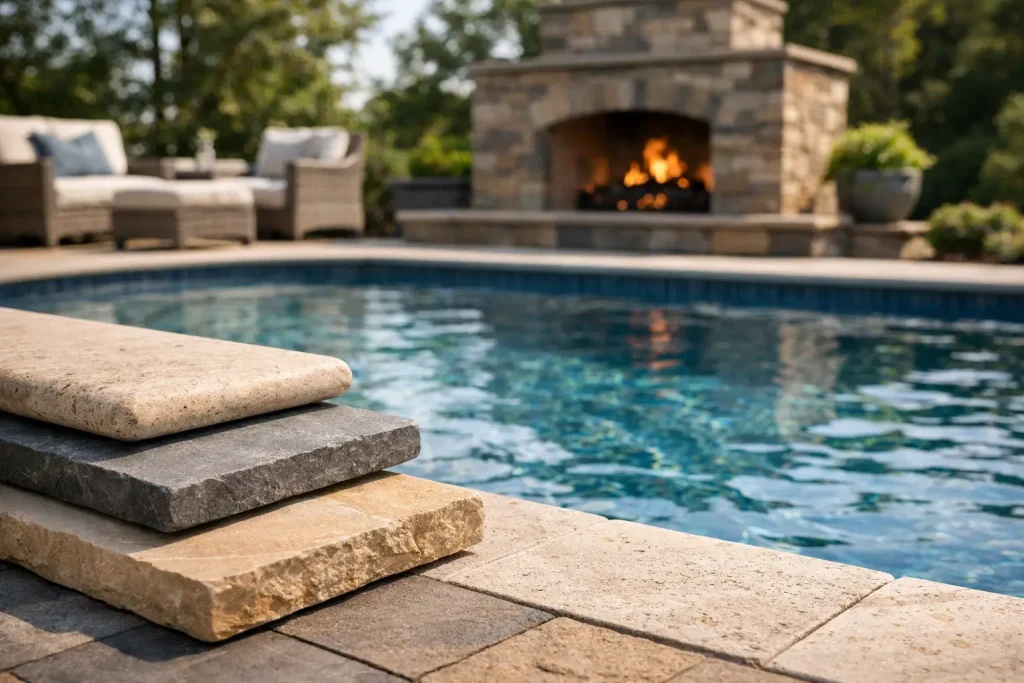
A pool can look beautifully resolved on paper, then feel slightly off the moment it is built. Often, that comes down to the coping. If you are working out how to select pool coping, you are not simply choosing an edge detail. You are deciding how the pool meets the surrounding landscape, how the surface feels underfoot, and how the entire outdoor space reads as a finished design.
Coping does practical work, of course. It protects the pool shell, manages the visual transition to paving, and creates a safer edge around the water. But in a well-designed project, it also carries a large share of the aesthetic weight. The right coping can make a pool feel crisp and architectural, softly coastal, or grounded in natural stone character. The wrong choice can interrupt the whole scheme.
How to select pool coping with the right priorities
The best place to start is not colour. It is context. A coping material may look exceptional as a sample, yet feel disconnected once it sits beside the home, paving, planting and waterline tile.
Begin by asking what role the pool plays within the broader design. In some homes, the pool is a hero feature with strong geometry and a clean, contemporary edge. In others, it is designed to sit more quietly within the landscape, where texture and tonal variation matter more than sharp contrast. Your coping should support that intent.
That is why material selection works best when it balances three things at once – appearance, performance and proportion. If one of those is ignored, the decision usually shows.
Start with the architectural style
A modern home with minimal detailing generally suits coping with a consistent finish, restrained veining and a refined edge profile. Think clean lines and controlled tones. A more organic or Mediterranean-inspired project often benefits from natural variation, softer edges and stone with a little more movement.
This does not mean every contemporary project needs pale stone, or every resort-style pool needs tumbled texture. It means the coping should feel intentional beside the architecture. The strongest pool designs do not rely on the coping to compete for attention. They use it to create cohesion.
Think beyond the pool edge
Coping is rarely viewed in isolation. It sits against pool tiles, adjacent paving, boundary walls, outdoor showers, garden beds and often nearby entertaining zones. If the coping tone clashes with the paving or feels too busy beside feature stone, the result can feel unresolved even when each individual element is high quality.
For that reason, many projects benefit from selecting coping and surrounding hardscape materials together. This is especially true when using natural stone, where undertone and surface character can vary from product to product. Seeing materials side by side usually makes the right choice much clearer.
Material matters more than most people expect
If you are researching how to select pool coping, material should be one of the first technical decisions you make. It affects heat retention, slip resistance, maintenance, durability and the overall visual finish.
Natural stone remains a preferred option for premium residential projects because it offers depth, texture and an architectural quality that manufactured materials often struggle to match. Stones such as travertine, limestone and granite each create a different mood.
Travertine is popular for good reason. It tends to stay cooler underfoot than many dense materials, and its natural tonal softness works across a wide range of outdoor settings. Limestone can feel elegant and understated, with a more contemporary calm depending on the selection. Granite generally offers strength and a denser character, often suiting sharper, more structured design schemes.
Porcelain coping can also be a strong option where a highly controlled look is the priority. It offers consistency in colour and finish, and can work well in contemporary spaces. The trade-off is that it may not deliver the same natural depth or tactile richness as stone.
Concrete coping can be cost-effective and flexible in form, but the visual result depends heavily on execution. In a high-end setting, it needs to be considered carefully alongside the rest of the material palette.
Surface finish, heat and slip resistance
A coping sample can be visually perfect and still be the wrong choice if it performs poorly around water. This is where practical clarity matters.
The surface should offer grip without feeling harsh on bare feet. Around pools, that balance is essential. Highly polished finishes are generally not appropriate. Honed, lightly textured or naturally grippy finishes tend to be more suitable, depending on the material.
Heat is another factor people often underestimate until summer arrives. Darker or denser materials can become uncomfortably hot in full sun, especially in exposed outdoor areas. Lighter-toned natural stone often feels more comfortable underfoot, but performance varies by product, density and finish. If the pool area receives strong western sun, this deserves extra attention.
Maintenance also belongs in the conversation. Some natural stones require sealing and periodic care to maintain their appearance. That is not necessarily a drawback. It is simply part of using authentic materials. The important thing is choosing a product whose upkeep suits the household and project expectations.
Edge profile shapes the final look
When people think about coping, they often focus on material first and leave the profile until later. In reality, edge shape has a significant impact on how finished the pool feels.
A drop-face coping creates a bolder, more monolithic appearance and can suit pools where you want a strong architectural edge. A square edge feels crisp and contemporary. A bullnose or softened arris can introduce a gentler, more classic expression.
The right profile depends on the style of the home, the pool construction method and the visual weight you want the perimeter to carry. There is no single best option. A profile that looks elegant on one project may feel too heavy or too decorative on another.
How to select pool coping profiles for your design
If the pool is intended to read as a clean extension of the entertaining area, a simpler profile usually works best. If the pool sits within a softer landscape setting, a rounded or more relaxed edge can feel more natural.
It also helps to consider scale. Larger format coping can make a pool look more expansive and tailored. Smaller or busier pieces may suit certain traditional settings, but in many contemporary homes they can fragment the line of the water.
Choose colour with water in mind
Pool water changes everything. A stone that looks warm beige on a showroom rack may read cooler beside blue water. A pale grey can suddenly feel sharper once reflected light hits it.
That is why coping should be chosen with the pool interior finish in mind. Waterline tiles, interior pool colour and surrounding paving all influence the final effect. Lighter coping usually creates a fresher, brighter perimeter, while deeper tones can add contrast and definition. Neither is automatically better. It depends on whether you want the pool to blend into the landscape or stand apart from it.
Subtle variation tends to age better than extreme contrast. Very stark combinations can feel dramatic at first, but may date more quickly or dominate the space in a way that limits future updates to landscaping or furnishings.
Budget should guide, not dominate
Coping sits in a highly visible and hard-working part of the project. Cutting corners here can be expensive to correct later.
That does not mean the most expensive material is always the best choice. It means value should be judged over time. A product that performs well, complements the design and wears gracefully often proves more worthwhile than a cheaper option that needs earlier replacement or compromises the overall finish.
This is also where expert advice can save both money and indecision. In many cases, the issue is not selecting a better material, but selecting a more suitable one. The right product for a shaded courtyard pool may not be the right one for a large family pool in full sun on the Gold Coast or in Brisbane.
What to bring into the selection process
A more efficient selection usually happens when you have a few key references ready. Pool plans help. So do samples of paving, cladding or exterior finishes already specified for the project. Photos of the home and outdoor area are useful too, especially if the pool sits near other major design elements.
For homeowners and renovators, this makes showroom conversations more productive. For architects, builders and landscape professionals, it allows material decisions to be made with fewer assumptions and cleaner alignment across trades.
If possible, look at larger samples rather than relying on a small cut piece. With natural stone in particular, scale reveals variation, movement and finish far more accurately.
The most successful coping selections feel obvious once they are made. Not because they are generic, but because they suit the project so well that nothing else would have worked as elegantly.
A good pool edge does not ask for attention. It gives the water a refined boundary, connects the material palette, and makes the outdoor space feel complete. Choose with that in mind, and the decision tends to hold its value long after the build is finished.