
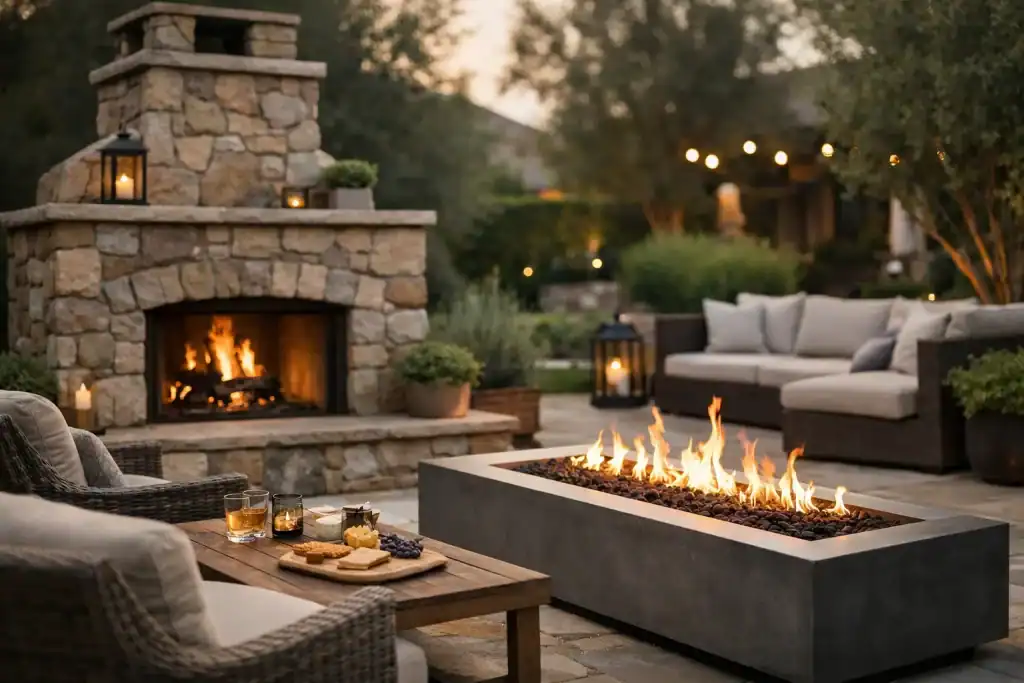
The right outdoor fire changes how a space is used. A terrace that sits empty after sunset becomes a place for long dinners, winter entertaining and quieter evenings outdoors. That is why an outdoor fireplace buying guide should start with more than heat output. The best choice is the one that suits your architecture, your lifestyle and the way your landscape is meant to feel after dark.
For some homes, that means a sculptural wood fireplace framed by natural stone. For others, it is a cleaner-lined gas design that can be switched on as guests arrive. Either way, an outdoor fireplace is rarely just an accessory. It becomes a visual anchor, often as important as the paving, the pool line or the outdoor kitchen.
Outdoor fireplace buying guide: start with how you live
Before comparing finishes or fuel types, think about how the space will actually be used. A family who wants weekend ambience and occasional entertaining may want something simple, low-maintenance and easy to operate. A client building a dedicated alfresco zone for year-round hosting may prioritise stronger heat, a larger scale and a more architectural presence.
This is also where placement begins to matter. If the fireplace is intended to support dining, it should sit comfortably within that zone without overwhelming the table setting or circulation space. If it is meant to create a lounge atmosphere, it may work better as a focal point opposite built-in seating or adjacent to a pool terrace. The wrong unit can still look attractive, but if it fights the way the space flows, it will feel like an afterthought.
A good test is to ask what role the fireplace needs to play. Is it there for warmth first, or atmosphere first? Should it blend into a larger material palette, or stand out as a hero feature? Those answers narrow the field quickly.
Choosing the right fuel type
Fuel type shapes almost every part of the buying decision, from installation to visual effect. There is no universal best option, only the best fit for the project.
Wood fireplaces
A wood fireplace offers the most traditional experience. You get the crackle, the scent and the visual depth of a real flame bed, which is hard to replicate. In the right setting, especially with stone paving, wall cladding or a more grounded landscape palette, wood can feel timeless.
The trade-off is maintenance and planning. You need space for wood storage, regular cleaning and proper flue consideration. Smoke management also matters, particularly in built-up residential areas or compact courtyards where neighbouring properties are close by. For clients who love ritual and atmosphere, wood is compelling. For those who want instant ease, it can feel demanding.
Gas fireplaces
Gas is often the most practical choice for refined outdoor living. It offers immediate ignition, reliable flame and cleaner operation, with none of the ash or wood handling that comes with a traditional fire. It suits contemporary homes particularly well, where crisp detailing and low-maintenance functionality are part of the brief.
The main consideration is installation. Gas supply, compliance and positioning need to be resolved early, especially in new builds or major renovations. The flame character is different from wood, but many premium models still deliver warmth and strong visual appeal. If convenience matters as much as design, gas is hard to overlook.
Bioethanol and other low-infrastructure options
For some projects, the appeal lies in flexibility. Bioethanol fireplaces can be useful where fixed services are limited or where a lighter installation footprint is preferred. They can suit smaller courtyards, decorative outdoor rooms or design-led applications where the flame is mostly about mood.
That said, they are not always the best solution if significant heat is the priority. Their value is often in ease of integration and visual simplicity rather than high-output performance.
Size, scale and proportion
One of the most common mistakes is choosing a fireplace that is too small for the setting. In a generous alfresco area with high ceilings, broad paving lines or substantial masonry, a compact unit can disappear. On the other hand, an oversized fireplace in a tight courtyard can dominate the space and make furniture planning awkward.
Scale should relate to both the architecture and the outdoor furniture layout. A fireplace seen from inside the home should also be considered in elevation, not just in plan. It may frame a view from the living room, align with a pool edge or sit beneath a pergola where proportions become very visible.
This is where a showroom consultation can be genuinely useful. It is much easier to judge presence, finish and visual weight in person than from specifications alone.
Materials matter as much as the fire itself
A fireplace is never viewed in isolation. The surround, hearth and adjoining surfaces all influence the final result. In premium outdoor spaces, these choices are often what separate a standard installation from a resolved architectural feature.
Natural stone is an obvious companion because it adds permanence, texture and tonal depth. Limestone, travertine, granite and other stone finishes each create a different mood. A softer, lighter stone can bring warmth and coastal ease. A darker or more textured selection can feel sharper and more dramatic. The key is to think in terms of the whole outdoor composition – paving, walling, coping, planting and fire element working together rather than competing for attention.
Durability also matters. Outdoor fireplaces sit within harsh conditions, including sun exposure, moisture and temperature change. Materials should be selected for external performance, not just appearance on install day. A beautiful finish that weathers poorly will quickly compromise the investment.
Placement, safety and shelter
The most beautiful fireplace still needs to work safely within the site. Wind exposure is one of the biggest practical issues in outdoor settings. Too much wind can affect flame performance, reduce warmth and make the area less comfortable than expected. Orientation, surrounding walls and overhead structures all influence this.
Sheltered alfresco zones often perform better than completely open sites, but shelter introduces other design and compliance considerations. Clearances, ventilation and material suitability need to be resolved carefully. This is especially true for built-in units integrated into joinery, cladding or custom masonry.
It is also worth thinking about how the fireplace interacts with adjacent features. You do not want heat or soot affecting delicate finishes, and you do not want the fire placed where it disrupts movement between the house, pool and outdoor dining. The best placements feel inevitable, as though the space was designed around them from the start.
Style direction and architectural fit
An outdoor fireplace should feel consistent with the home, not borrowed from another project. A pared-back contemporary residence may call for a restrained linear form with minimal visual clutter. A more textural home with layered stone and timber may suit a heavier, more grounded fireplace expression.
This is where restraint is useful. Chasing a trend can date quickly, especially with fixed outdoor features. Cleaner forms, honest materials and a palette that connects to the broader architecture usually age better. If your home already has strong gestures – dramatic stonework, a water feature, bold planting – the fireplace may be better as a supporting element. If the outdoor zone feels flat, the fireplace can take on more sculptural presence.
For homeowners and design professionals alike, the strongest results tend to come from cohesion. Earth, fire and water do not need to compete. When handled well, they create a layered outdoor experience that feels calm, resolved and genuinely luxurious.
Budgeting beyond the unit price
An outdoor fireplace buying guide would be incomplete without talking about real project cost. The unit itself is only part of the budget. Installation, service connections, structural work, flue requirements, surrounds and finishing materials can significantly change the total figure.
That does not mean the higher upfront option is always the more expensive one over time. A better-quality fireplace with durable materials and cleaner operation may offer stronger long-term value than a cheaper choice that needs replacement or constant maintenance. It depends on how often the fireplace will be used, how exposed the site is and how integrated the feature is within the build.
For new homes and major renovations, the smartest approach is to make the fireplace decision early. Retrofitting later can be done, but it usually means more compromise in positioning, services and visual integration.
When to seek expert advice
If the fireplace is part of a larger outdoor scheme, expert input is worth having from the start. Architects, landscape designers, builders and specialist suppliers each see different parts of the puzzle. Bringing those perspectives together early usually results in a cleaner specification and a more resolved finish.
That is especially true when combining the fireplace with natural stone or other premium outdoor materials. A considered selection process helps avoid mismatched tones, awkward junctions and product choices that look impressive separately but disjointed together. For projects across Brisbane, the Gold Coast, Sunshine Coast and Northern Rivers, local conditions such as coastal exposure and outdoor living patterns can also shape what will perform best.
The right fireplace should feel easy once it is installed. It should suit the way you entertain, sit comfortably within the architecture and add presence without forcing it. Choose with the full space in mind, and the result will do more than warm an evening – it will give the outdoors a centre of gravity.