
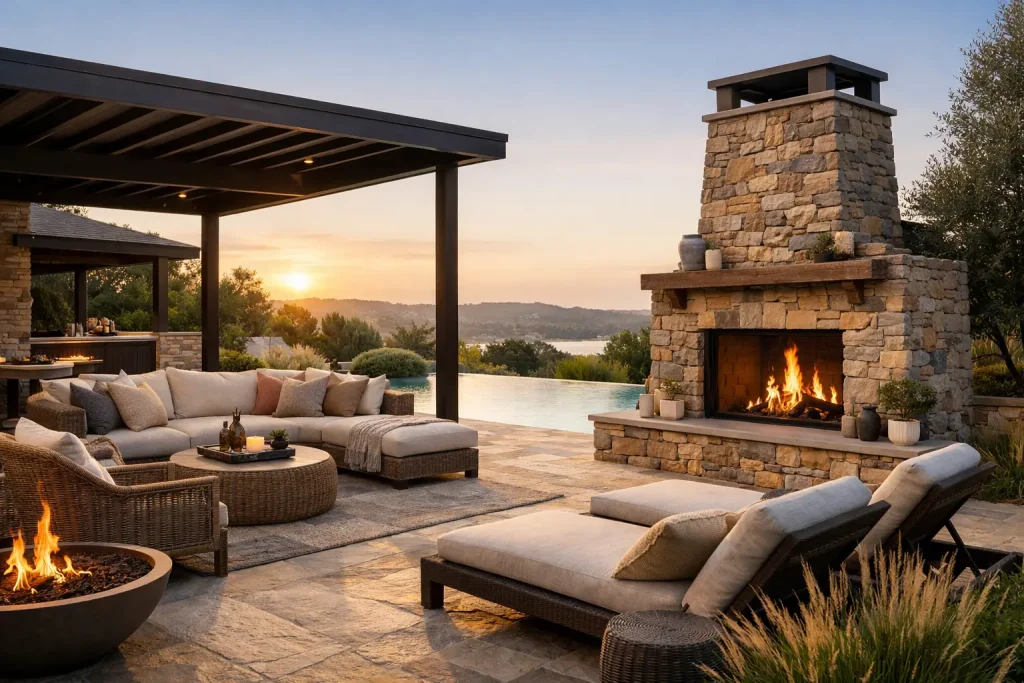
A well-designed outdoor room now has to do more than hold a table, a barbecue and a few occasional chairs. The most compelling outdoor living design trends are moving towards spaces that feel considered, architectural and genuinely liveable – not just styled for a weekend photo. For homeowners, builders and designers, that means choosing materials and features that can handle the climate, support daily use and still deliver a strong visual point of view.
What is changing is not simply taste. It is the expectation that outdoor areas should work as an extension of the home, with the same level of finish, atmosphere and practicality. That shift is shaping everything from paving selection to the placement of fireplaces, pools, showers and statement water features.
Outdoor living design trends are becoming more architectural
The era of treating the backyard as a separate zone is fading. Strong outdoor spaces are now designed with the house in mind from the beginning, not added on at the end. Materials continue across thresholds, sightlines are considered from internal living areas, and exterior features are chosen to support the broader architectural language of the home.
Natural stone is central to this shift because it brings depth and permanence that manufactured finishes often struggle to replicate. A limestone paver, textured wall cladding or cobblestone detail does more than fill a surface – it creates hierarchy and contrast. The result feels calmer and more resolved.
That does not mean every project should pursue a minimal, monolithic look. Some homes suit warmer, more rustic finishes, while others call for crisp edges and cooler tones. The key trend is cohesion. Outdoor materials are being selected less as isolated products and more as part of a complete palette.
Earth, fire and water are shaping the outdoor brief
The most enduring outdoor living design trends are not really about novelty. They are about elemental comfort. Spaces feel richer when they balance grounding materials, warmth and movement.
Earth brings texture and permanence
Stone remains one of the most desired outdoor materials because it performs on both an aesthetic and practical level. It suits high-traffic entertaining zones, pool surrounds, pathways and feature walls, while offering variation in tone, finish and scale. It also ages with character, which matters in outdoor environments where exposure is part of the story.
There is, however, a clear move away from overly busy combinations. Designers are favouring fewer materials used with more confidence. Large-format pavers, tonal layering and tactile surfaces are replacing patchwork schemes that compete for attention. Crazy paving still has a place, but usually in a more disciplined palette where the shape variation feels deliberate rather than decorative.
Fire extends the way outdoor spaces are used
An outdoor area that only feels comfortable for part of the year is rarely used to its potential. Fire features are increasingly being specified not as luxury extras, but as functional anchors that stretch the season and make evening entertaining more inviting.
The style of fireplace or outdoor fire depends on the project. Some homes suit a clean-lined petrol fireplace integrated into a built entertaining wall. Others benefit from a more grounded fire pit setting that encourages conversation and a slower pace. Wood brings ritual and atmosphere, while petrol and electric options offer control and convenience. The right answer depends on how the space will be used, local requirements and the level of maintenance the owner is happy to take on.
What matters most is placement. A fire feature should strengthen the layout, not interrupt it. When positioned well, it gives the entire outdoor zone a centre of gravity.
Water adds calm, movement and relief
Water has become a stronger part of the outdoor brief, especially in projects where wellness and resort-style living are part of the goal. This can be as expansive as a pool framed by quality coping and stone paving, or as restrained as an outdoor shower, basin or simple water feature bringing sound and softness to a courtyard.
There is a practical side to this trend too. In warmer climates across Brisbane, the Gold Coast and the Sunshine Coast, water elements can make outdoor spaces feel more usable and more connected to the way people actually live. Pool surrounds are no longer treated as purely functional safety zones. They are being designed as integrated lounging and entertaining spaces with a more refined material language.
The move towards quieter luxury
One of the clearest changes in outdoor design is the shift from obvious statement-making to a more restrained kind of luxury. Instead of relying on excess, high-end spaces are using material quality, proportion and consistency to create impact.
This is where premium finishes earn their place. A beautifully selected stone with subtle movement, a fireplace with a resolved architectural surround, or pool coping that feels tailored to the project often says more than a long list of decorative additions.
Muted natural tones are leading this direction. Warm whites, soft greys, sand, charcoal and mineral hues work because they sit comfortably with landscaping, timber, render and metal finishes. They also age well. Trend-driven colours can date quickly outdoors, particularly in strong Australian light.
The trade-off is that quieter palettes demand better detailing. When the design language is restrained, every junction and material transition becomes more visible. Simplicity only works when it is done properly.
Outdoor rooms are becoming more specific
Another notable shift is that outdoor areas are no longer expected to do everything from one flat expanse. Instead, they are being shaped into more purposeful zones.
A dining terrace might sit directly off the kitchen with durable pavers underfoot and easy access to cooking and serving areas. A separate fire-focused space might be arranged for late evenings and winter use. Around the pool, the emphasis may move towards sun lounges, outdoor showers and surfaces that stay comfortable underfoot. In smaller courtyards, a single sculptural basin or compact water feature can create a sense of retreat without crowding the footprint.
This zoning makes outdoor spaces feel more usable because it reflects real patterns of living. It also allows materials to work harder. A cobblestone path, stone walling or contrasting paving band can subtly define movement without needing heavy visual devices.
Sustainability is becoming a design standard, not a sales pitch
Clients are asking sharper questions about longevity, maintenance and material integrity. That is influencing outdoor living design trends in a meaningful way. Products chosen for exterior spaces are expected to last, weather well and justify their place over time.
Natural materials often appeal here because they are not trying to imitate something else. Stone, in particular, carries a sense of honesty that suits contemporary and classic homes alike. But sustainability is not just about the material itself. It is also about selecting finishes appropriate for the site, avoiding short-term styling decisions and specifying features that will still feel useful in five or ten years.
There is no single perfect answer for every project. A family home with young children may prioritise slip resistance, heat performance and low maintenance around a pool. A designer-led courtyard may place more emphasis on visual texture and sculptural detail. The best outcome usually comes from balancing appearance with how the space will actually be lived in.
Designing for comfort, not just appearance
The outdoor spaces people return to most often are the ones that feel easy. That means considering sun, shade, wind, privacy, lighting and circulation just as carefully as materiality.
A beautiful paver can disappoint if it overheats in full sun. A fireplace can feel underwhelming if it is exposed to prevailing breezes. Pool coping needs to look refined, but it also needs to be comfortable at the edge and work cohesively with surrounding surfaces. Even an outdoor shower or stone basin becomes more successful when it sits naturally within the plan rather than appearing as an afterthought.
This is where early product selection can make a real difference. When surface materials and feature elements are considered together, the result is more resolved and often more efficient to deliver. It also opens up stronger design opportunities, especially for custom homes and larger renovations where exterior spaces play a major role in the overall experience of the property.
What to watch next
Outdoor design is heading towards spaces that feel permanent, expressive and easy to inhabit. Expect to see more projects built around tactile natural stone, more integrated fire features, and more thoughtful use of water in both practical and atmospheric ways. The strongest schemes will continue to avoid clutter and focus on a smaller number of well-chosen materials and features.
For homeowners and design professionals alike, the opportunity is not to chase every new look. It is to create an outdoor setting with enough substance to stay relevant long after the trend cycle moves on. When the palette is grounded, the details are resolved and the space genuinely supports the way people live, the result always feels current.