
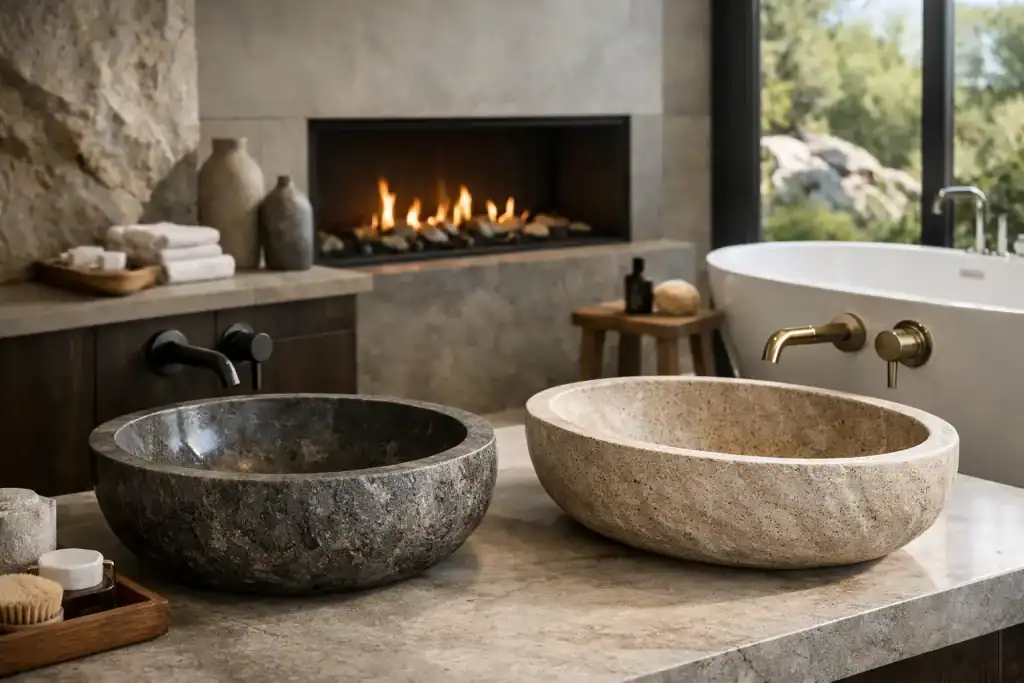
A basin can set the tone for the entire room. In a pared-back ensuite, it becomes the focal point. In a layered powder room, it can be the detail that gives the space its edge. That is why stone basins continue to hold their place in high-end bathroom design – they bring presence, texture and a sense of permanence that lighter, more uniform materials rarely match.
For homeowners, designers and builders aiming for a resolved interior, stone offers something more than utility. It carries natural variation, tonal depth and a sculptural quality that feels considered from every angle. The effect is immediate, but the right result depends on more than choosing a beautiful piece.
Why stone basins feel different
There is a reason natural stone reads as more architectural than many manufactured alternatives. It has visual weight. Even in compact rooms, a stone basin can ground the vanity zone and give the joinery around it more substance.
That said, the appeal is not only visual. Stone has a tactile quality that changes the way a bathroom feels in daily use. Honed finishes tend to feel soft and understated, while more textured finishes can introduce a rawer, earthy character. The exact mood depends on the stone itself, the profile of the basin and the materials surrounding it.
This is where restraint matters. A heavily veined stone basin paired with busy tiles, statement tapware and contrasting joinery can tip into excess. In other spaces, that same basin is exactly what the scheme needs. As with most premium materials, success comes from balance rather than feature overload.
Choosing stone basins for the space
Not every basin suits every room, even when the material is exceptional. Scale, proportion and placement all matter.
In a powder room, stone basins often work best as a hero element. A rounded vessel basin in travertine, marble or limestone can sit comfortably on a slim vanity and create a strong first impression without needing much else around it. Because powder rooms are seen briefly and used differently to family bathrooms, there is usually more room to be expressive.
In a main bathroom or ensuite, the decision tends to be more layered. You need to think about bench depth, splash zones, storage, tap placement and who uses the room each day. A vessel basin may deliver more impact, but an integrated or lower-profile form can feel calmer and prove easier in high-use spaces. If the project is for a family home, practicality may carry more weight. If it is for a master suite with a boutique-hotel feel, sculptural value might lead.
Double vanities also change the equation. Two stone basins can look striking, but only when the proportions are right. If the vanity length is tight, squeezing in a pair of oversized bowls can make the arrangement feel crowded. Sometimes one generous basin in a smaller room is the more resolved choice.
Shape, profile and proportion
Round and oval basins tend to soften a room, especially when paired with straight-edged joinery or rectified tiles. They suit interiors that lean warm, quiet and natural.
Square and rectangular forms feel more architectural. They can sharpen a scheme and sit well within contemporary spaces that rely on clean lines. The trade-off is that they can feel harder visually, so they often benefit from warmer stone tones or softer surrounding finishes.
Profile matters just as much as shape. Thick-walled basins feel solid and monolithic. Finer edges appear more tailored and refined. Neither is inherently better – it depends on whether the room calls for grounded texture or lighter definition.
Which stone works best?
This is where aesthetics and practicality meet. Different stones bring different qualities, and the right selection depends on the application, the design language and the level of maintenance the client is comfortable with.
Travertine remains a favourite for bathrooms with a warm, natural palette. It suits organic interiors, Mediterranean influences and contemporary spaces that want softness rather than shine. Its character is part of its appeal, but that same character means variation should be expected, not avoided.
Marble offers a more elevated, classic expression. It can feel crisp and luxurious or moody and dramatic depending on the colour and veining. In the right setting, marble stone basins create a polished, high-design finish. They do, however, ask for a little more care and thoughtful specification.
Limestone sits comfortably between refinement and understatement. It has a quieter surface movement and often works beautifully in interiors where texture matters more than contrast. For designers aiming for calm, tonal spaces, limestone can be particularly effective.
River stone or hand-carved natural forms introduce a more raw, elemental look. These pieces can be exceptional in the right project, especially in outdoor bathrooms or spaces with a stronger connection to landscape. They are less formal, more expressive and not always the easiest fit for tightly resolved minimalist interiors.
Finish changes the mood
A polished finish reflects more light and reads as more formal. A honed finish feels softer and more contemporary. Textured or hand-finished surfaces can add depth, though they may also require a little more attention when cleaning.
This is one of the most overlooked choices in specification. Two basins in the same stone can feel completely different depending on the finish. If the room already has a lot of gloss through tiles, mirrors or tapware, a honed basin often creates better contrast. If the scheme is matte and tonal throughout, a polished surface can add just enough lift.
Practical considerations before you specify
Beauty gets the project shortlisted. Practicality is what keeps it working well after handover.
Weight is an obvious consideration but an important one. Stone basins are heavier than ceramic alternatives, so the vanity and benchtop need to be suited to the load. This is usually straightforward when planned early, but less so when a basin is being swapped in late during a renovation.
Sealing also matters. Natural stone is porous to varying degrees, which means correct sealing and maintenance are part of ownership. For some clients, that is entirely acceptable given the finish they gain. For others, a lower-maintenance material may be the better fit. It is worth being honest about this from the outset.
Cleaning should be gentle and consistent rather than harsh and infrequent. Abrasive products can dull the finish or affect the seal. In most cases, mild cleaning products and a soft cloth are enough. This is not difficult, but it is different to the way some people treat standard bathroom fixtures.
Tapware selection needs attention too. Wall-mounted tapware can help a vessel basin feel cleaner and more architectural, while bench-mounted sets may suit other layouts better. The key is making sure the spout projection and height align with the basin shape to avoid awkward splashback or poor usability.
Stone basins in indoor and outdoor settings
Stone naturally crosses the boundary between inside and out, which is part of its appeal in contemporary Australian homes. A basin used in an ensuite can often be echoed in an outdoor shower or pool house to create continuity across the broader design.
In these settings, context matters. An outdoor basin may benefit from a more textured or relaxed form that sits comfortably with planting, paving and natural light. A highly polished marble basin might be perfect indoors but feel too formal in an open-air environment. The best projects treat outdoor selections as part of the architecture, not as afterthoughts.
For homes across Brisbane, the Gold Coast, Sunshine Coast and Northern Rivers, where outdoor living is central to the way spaces are used, that continuity can be especially effective. The transition from bathroom to courtyard, pool zone or garden feels more resolved when the material language stays consistent.
How to make the overall scheme feel considered
A strong basin does not need to compete for attention. In fact, the best results usually come when the surrounding selections are edited carefully.
If the basin has movement and variation, quieter vanity finishes often help. If the stone is pale and understated, richer timber joinery or darker tapware can add depth. The mirror, wall finish and lighting should support the basin rather than distract from it.
This is also where showroom selection has real value. Stone is tactile and inherently varied. Seeing tone, edge detail and finish in person makes it much easier to understand how a basin will sit within the full material palette. For projects where every surface matters, that physical read is hard to replace.
Stone basins are not the right choice for every brief. Some projects need harder-wearing simplicity, tighter budgets or a more minimal maintenance profile. But where the goal is a bathroom with depth, material honesty and a strong architectural point of view, they offer something few other fixtures can. Choose well, scale carefully and let the material speak.