
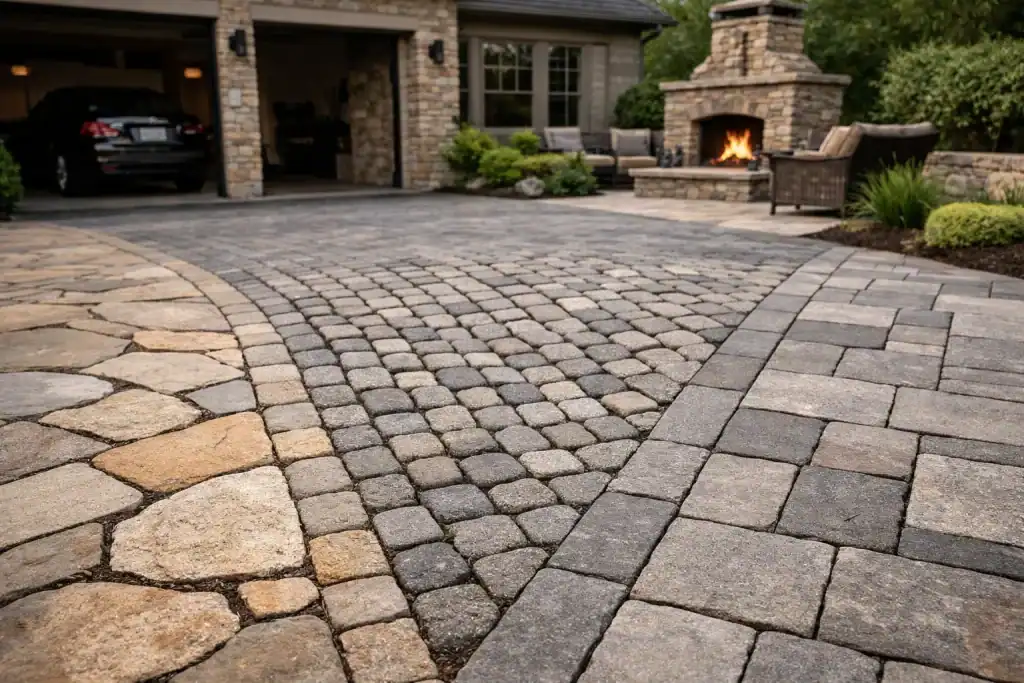
A driveway does more than carry vehicles from the street to the garage. It sets the tone before the front door even comes into view. When the material is chosen well, it gives a home weight, permanence and a level of finish that plain concrete rarely matches. That is why stone pavers for driveways remain a preferred option for projects where durability matters just as much as design.
For homeowners and designers, the appeal is obvious. Natural stone brings variation, depth and texture that feel resolved rather than manufactured. It works with contemporary architecture, classic facades and landscape-led homes alike. The better question is not whether stone suits a driveway, but which stone, format and finish will perform properly for the way the space is actually used.
Why stone pavers for driveways stand apart
Driveways are hard-working surfaces. They deal with vehicle weight, turning pressure, weather, leaf litter, tyre marks and regular exposure to dirt and grit. A material that looks impressive in a courtyard or pool area does not always translate neatly to vehicular use.
Stone pavers for driveways succeed when they strike the right balance between structural performance and visual restraint. They offer compressive strength, a natural surface character and a premium finish that improves the arrival experience of a home. They also age in a way many clients value. Rather than looking worn out, quality stone often develops a softer, more settled appearance over time.
That said, stone is not a one-size-fits-all category. Density, thickness, finish and installation method all affect how the surface performs. The difference between a driveway that looks sharp for years and one that shifts, stains or chips usually comes down to specification rather than appearance alone.
Choosing the right stone for a driveway
The best driveway stone is usually dense, hard-wearing and suited to exterior conditions. Granite is a reliable choice when strength is the priority. It handles load well, resists wear and offers a crisp, architectural look that suits modern homes. Bluestone is another popular option, especially for projects seeking a darker, refined palette. It has a grounded, sophisticated character, though the exact performance will depend on grade and finish.
Quartzite can be an excellent middle ground where natural movement and high durability are both desired. It tends to have strong structural properties and a more expressive surface than some more uniform stones. Porphyry and cobblestone formats are also well suited to driveways, particularly on sloping sites or homes where a more textured, European feel is part of the brief.
Limestone and travertine are often loved for their softer appearance, but they need more caution in a driveway setting. Some dense varieties can work in the right application, but they are generally better reserved for areas with lighter traffic or where the design intent clearly outweighs the need for a highly forgiving surface. This is where project context matters. A front court used occasionally is different from a busy family driveway with daily turning movements and multiple vehicles.
Finish matters as much as the stone itself
A driveway surface needs grip, but it also needs to be easy to live with. Highly polished or smooth finishes are rarely the right choice. Honed, flamed, bush-hammered or naturally split finishes are more practical because they provide texture underfoot and under tyre without looking overly coarse.
The right finish depends on both climate and style. In wetter areas, or on sites shaded by trees, additional slip resistance becomes more important. On steep driveways, texture is not just a comfort issue but a safety issue. At the same time, an overly rugged finish can trap dirt more readily and create a heavier visual effect than some homes need.
This is where a curated selection process is valuable. The finish should feel intentional within the architecture, not simply engineered for function. A clean-cut contemporary home may call for a lightly textured, sawn format with tight joints. A more organic landscape setting may benefit from cobblestones or a tumbled edge that feels less formal.
Format, scale and pattern
The scale of the paver changes the entire reading of a driveway. Large-format stone pavers create a calmer, more expansive look, especially on wider frontages or homes with strong horizontal lines. Smaller units, including cobblestones, introduce rhythm and texture and can feel more established or European in character.
Pattern also affects performance. Running bond and stack bond layouts can look crisp, but the chosen format must still suit vehicular loading. Interlocking patterns often provide excellent structural behaviour, particularly where turning movements are frequent. Cobblestones are especially effective in this respect because their smaller size helps distribute load and accommodate slight movement.
Borders and edge detailing deserve attention as well. A contrasting stone band, a soldier course or a neat restraint detail can sharpen the whole presentation. These choices may seem secondary, but they are often what make the driveway feel designed rather than merely surfaced.
The hidden part that matters most
No stone paver will outperform a poor base. This is the least glamorous part of the project and the most critical. A driveway requires proper excavation, compaction, drainage planning and a base designed for vehicular loads. On some projects, a mortar bed or concrete slab with adhered pavers may be appropriate. On others, a flexible pavement system may be the better fit.
The right approach depends on soil conditions, slope, expected traffic and paver type. If the driveway will support delivery vehicles, caravans or frequent multi-car use, that should be accounted for early. Drainage is equally important. Standing water shortens the life of many surfaces and can affect both appearance and safety.
This is why stone selection should never happen in isolation from installation planning. A beautiful sample in a showroom is only the beginning. Thickness, edge profile, laying method and site conditions all need to align.
Colour and architectural cohesion
Driveways occupy a large visual footprint, so colour should relate closely to the home’s exterior materials. Cooler greys and charcoal tones sit comfortably with concrete render, black detailing and minimalist architecture. Warmer greys, taupes and sandy tones tend to work well with timber, lighter masonry and more relaxed landscape palettes.
Natural stone brings variation by default, and that is part of its appeal. It softens large paved areas and avoids the flatness that can come with more uniform materials. Even so, variation should feel controlled. The best results come from considering the driveway as part of a larger exterior composition that may also include wall cladding, entry paths, pool surrounds or outdoor entertaining zones.
For design-led residential projects, continuity matters. When the driveway speaks to the rest of the hardscape, the entire property feels more resolved. That does not mean every surface must match exactly, but the materials should belong to the same visual language.
Maintenance and long-term expectations
Natural stone is durable, but it is not maintenance-free. Sealing may be recommended depending on the stone type and finish, particularly where staining from leaves, oil or tyre residue is a concern. Regular sweeping and occasional washing help preserve the surface and reduce build-up in textured finishes.
The practical question is not whether stone needs care, but whether the level of care suits the client. Most premium homeowners are comfortable with some maintenance if the material reward is there. What matters is being realistic from the start. A driveway beneath heavy tree cover will behave differently from one in an open, sunny front yard.
There is also an aesthetic trade-off to consider. Some clients want a perfectly consistent, freshly finished look year-round. Others prefer materials that settle and patinate naturally. Stone tends to favour the second camp, which is part of why it feels so established in high-end landscape design.
When stone pavers are the right choice
Stone is right for a driveway when the goal is to create a more architectural arrival, improve material continuity across the property and invest in a surface with genuine longevity. It is especially effective where the driveway is highly visible from the street or forms part of a considered front landscape scheme.
It may be less suitable where budget is the overriding factor, where installation shortcuts are likely, or where the site conditions have not been properly assessed. Premium materials reward proper planning. Without that, even the best stone can be undermined.
For projects across Brisbane, the Gold Coast, the Sunshine Coast and Northern Rivers, climate, slope and landscape context all shape the right outcome. The most successful driveways usually come from selecting stone with both the home and the site in mind, not simply choosing what looks impressive in isolation.
A well-chosen driveway surface should feel quiet but undeniable – strong under pressure, refined on approach, and entirely at home with the architecture around it.