
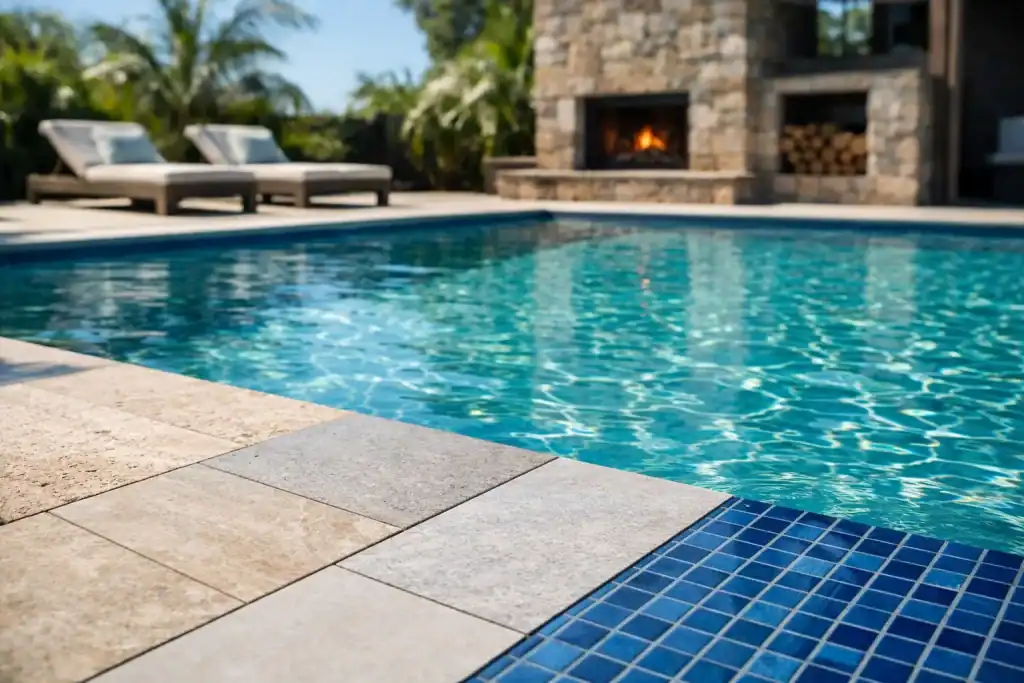
A pool can look impeccably composed on a plan, then reveal one uncomfortable flaw on the first cloudless January afternoon: the edge is too hot to cross barefoot. For homeowners asking which pool tiles stay cooler, the answer begins with colour, but it does not end there. Material, finish, tile format, surrounding paving and the amount of direct sun all shape how a pool feels to use.
In Brisbane, the Gold Coast and other warm coastal settings, this is not a minor finishing detail. The tiles at the waterline, on entry steps, around a spa and across the pool surround influence both the visual temperature of the design and the literal temperature underfoot. A considered selection can make the transition from house to water feel calmer, safer and far more inviting.
Which pool tiles stay cooler?
As a general rule, light-coloured pool tiles stay cooler than dark tiles in direct sun. White, soft ivory, pale grey, sand, light blue and muted green finishes reflect more solar energy than charcoal, black, deep navy and saturated dark greens. This is the same principle that makes a light natural-stone terrace more comfortable than a dark paver on a hot day.
For areas that will be walked on barefoot, pale matt porcelain is often one of the most dependable choices. It is durable, low-maintenance and available in refined stone-look finishes that suit contemporary, coastal and Mediterranean-inspired homes. A lightly textured finish provides useful grip without creating an aggressively rough surface.
Light natural stone can also be an excellent choice for pool coping and surrounds. Pale limestone, travertine and selected sandstone varieties are valued for their softer, more organic character and can be more forgiving underfoot than some dense, dark paving products. However, stone is not a single material category. Mineral composition, density, finish, colour variation and sealing requirements all need to be assessed for the specific application.
Inside the pool, light ceramic, porcelain and glass mosaics generally offer a cooler visual effect and a brighter water colour. Because submerged tiles are cooled by water, heat underfoot is less of a concern than it is on exposed coping, steps and sun shelves. Their colour still matters, though, particularly on shallow ledges where the surface can sit close to the waterline and receive strong sun.
Colour has the greatest influence
A tile’s colour is the clearest predictor of how much heat it will absorb. Dark surfaces absorb a greater proportion of sunlight and can become uncomfortably hot, especially when they are dry and exposed through the middle of the day. Black pool coping may create a striking architectural line, but it asks more of the site conditions than a pale finish does.
That does not mean dark pool tiles should always be ruled out. A dark waterline tile can add depth and definition to a pale rendered pool, while a deep blue or charcoal interior can create a dramatic reflective surface. The practical approach is to reserve darker tiles for submerged areas, vertical faces or details that are not routinely crossed barefoot. Pair them with lighter coping and surrounding paving where comfort matters most.
Also consider the difference between a sample board in a showroom and a full expanse installed outdoors. A soft grey can read quite light on a small sample but become noticeably warmer when used across a broad, sun-facing terrace. Viewing samples outside, ideally at different times of day, gives a more reliable sense of colour and surface character.
Material and finish change the experience
Two tiles in a similar colour can feel very different in use. Dense porcelain generally performs consistently outdoors, with minimal water absorption and excellent resistance to pool chemicals when a suitable product is specified. Its surface can still heat up in direct sun, but a pale porcelain tile is usually a practical choice for exposed pool zones.
Ceramic tiles are commonly used for pool interiors and waterlines, where their colour range and glazed finish offer strong design flexibility. For external wet areas, check that the product is rated for the intended use rather than assuming every ceramic tile is suitable around a pool.
Glass mosaics bring luminosity to waterlines, spas and pool interiors. Their reflective quality can soften the visual weight of a deeper colour, yet glass installed above the waterline can still become hot in full sun. They are usually best treated as a feature material rather than the main walking surface.
Natural stone offers a tactile quality that manufactured finishes cannot fully replicate. Honed or tumbled pale stone around a pool creates a relaxed connection between architecture, landscape and water. Yet natural stone requires informed selection. Some products are more porous than others, some react differently to saltwater environments, and a finish that feels beautiful underfoot may not meet the slip-resistance needs of every location. Product suitability should be confirmed before final specification.
Texture adds another layer. Highly polished surfaces can reflect light but may be unsuitable where water is regularly tracked across the ground. A matt, honed, brushed or lightly textured finish is usually more considered for pool surrounds. The goal is not maximum roughness. It is a surface with appropriate slip resistance that remains comfortable on bare feet and easy to maintain.
Do cooler tiles make pool water cooler?
They can contribute, but they are not the main control on water temperature. Pool water is influenced more strongly by sun exposure, pool size and depth, wind, heating systems, covers and whether the pool is shaded. A dark pool interior absorbs more energy and may encourage a warmer-looking, warmer-feeling pool, particularly in shallow sections. A lighter interior reflects more light and often produces a clearer blue or aqua appearance.
The result depends on the overall palette. White interiors can create bright, sparkling water, while pale blue and soft grey can deliver a cleaner, more contemporary tone. Sand, cream and light green tiles tend to produce gentler, resort-like water colours. The right choice is the one that supports the architecture while accounting for how the pool will be used through summer.
Focus on coping, steps and sun shelves
When comfort is the priority, put the greatest scrutiny on the places feet actually meet the pool. Coping receives intense heat and is often the first surface children and guests step onto. Entry steps, tanning ledges and spa perimeters can be partially submerged, then exposed as water levels move or people sit on the edge.
A pale coping material with a practical finish is usually the strongest starting point. If the project calls for darker waterline tiles or a moody interior, the coping provides an opportunity to introduce contrast without sacrificing usability. This balance often produces a more resolved design than covering every surface in one dark finish.
Surrounding landscape choices matter as well. A broad pale stone or porcelain terrace reduces the amount of heat stored around the pool. Shade from a pergola, pool umbrella or well-positioned planting can transform how the area performs in late afternoon. Even a beautifully selected tile benefits from a landscape plan that respects the Australian sun.
Questions to ask before choosing pool tiles
Ask how the tile will be used, not simply where it will be installed. Is it submerged, used as a waterline feature, installed on a wet step, laid as coping or used across a fully exposed pool deck? The answer changes the appropriate material, finish and installation method.
It is also worth asking about slip rating, chemical resistance, saltwater suitability, cleaning requirements, grout selection and expected colour variation. For natural stone, confirm sealing and maintenance expectations from the outset. For porcelain and ceramic, make sure the specific product is approved for exterior pool use where relevant.
A sample should be viewed outdoors beside the proposed coping, façade colours and planting palette. Wet it, stand on it barefoot and observe it in morning and afternoon light. This simple exercise often reveals more than a catalogue image, particularly when deciding between several pale neutrals.
A cooler pool palette without compromising the design
The most comfortable pool schemes are rarely the palest possible surfaces from edge to edge. They use light, heat-conscious materials where people walk, then build depth through waterline detail, interior tone, planting and architectural shadow. A pale limestone-look porcelain coping might sit beside a soft blue mosaic waterline, for example, while deeper accents appear in a shaded spa wall or feature niche.
At HAUS Collective, a material selection can be considered as part of the whole outdoor setting: stone underfoot, water at the pool edge and the surrounding finishes that bring the space together. The best pool tile is not just one that photographs well. It is one that remains a pleasure to walk across when summer is at its brightest.