
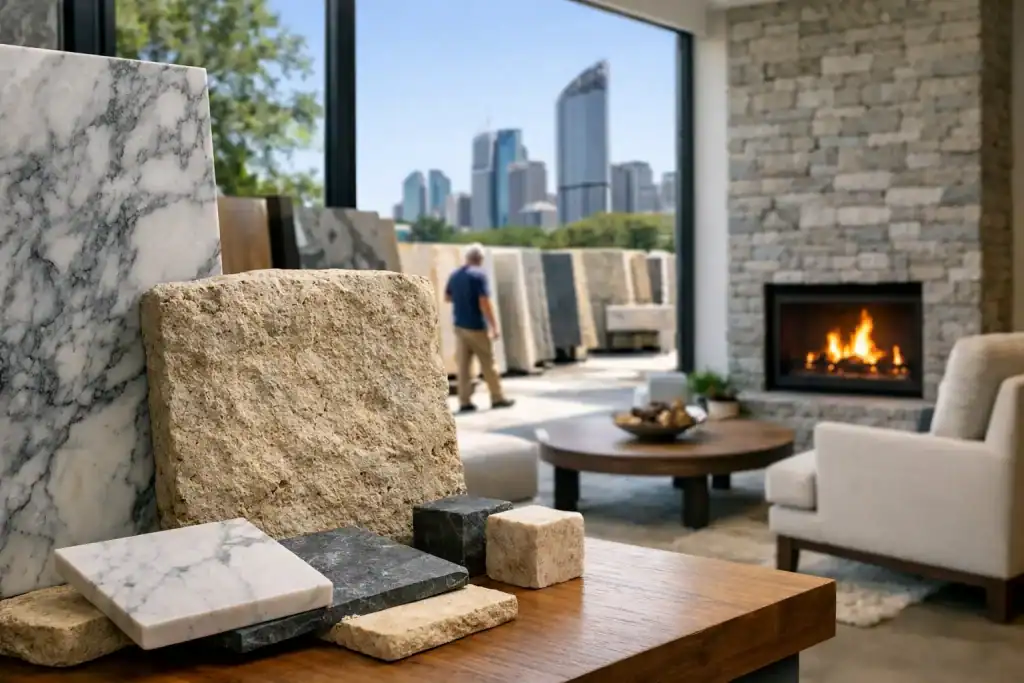
A stone sample can look perfect under showroom lighting, then feel completely wrong once it meets full Queensland sun, pool water and a pale render wall. That is why choosing a natural stone supplier Brisbane clients can rely on is not just about finding a material you like. It is about finding the right stone, in the right format, with the right guidance for how you actually live and build.
For premium homes and landscape projects, natural stone carries more weight than a surface selection. It sets the tone of a space. The softness or movement in the stone, the way it handles light, the scale of the tile or paver, even the edge detail around a pool or step – these decisions shape whether the finished project feels calm and resolved or visually disconnected.
What to expect from a natural stone supplier Brisbane professionals trust
The best suppliers do more than hold stock. They curate. That matters because natural stone is not a uniform category. Travertine, limestone, marble, granite and quartzite all bring different visual character, maintenance expectations and performance traits. Even within the same stone type, colour variation, density and finish can change how suitable it is for a particular application.
A quality supplier should be able to guide you through those differences with clarity. If you are selecting pool coping, for example, you need advice that considers heat underfoot, slip resistance, edge profiles and how the coping works with surrounding pavers. If you are specifying internal flooring, the conversation shifts towards finish, movement, cleaning expectations and how the stone reads in different light conditions.
This is where design-led selection becomes valuable. Rather than presenting stone as a commodity, an experienced supplier helps narrow options based on architecture, lifestyle and the atmosphere you want to create. That approach saves time, but more importantly, it leads to better outcomes.
Range matters, but curation matters more
It is easy to assume that a bigger range is always better. In practice, too much choice without direction can stall a project. A refined natural stone collection is often more useful than an endless catalogue, especially when you are trying to create a cohesive result across indoor and outdoor spaces.
For many Brisbane projects, continuity is a priority. Homeowners and designers often want a stone palette that works from entry path to pool zone, from interior floor to outdoor entertaining area. That does not mean using the exact same product everywhere. It means selecting materials that relate to each other in tone, scale and texture.
A supplier with a strong eye for curation can help you build that continuity. You might pair a soft limestone paver outdoors with a more refined internal tile, or use cobblestones and wall cladding to echo the main paving material without making the scheme feel repetitive. The result feels intentional rather than assembled in stages.
Why showroom experience still matters
Stone is tactile and visual in a way that screen-based browsing cannot fully capture. Images are useful for shortlisting, but they flatten detail. They cannot show the depth of a split-face cladding, the true warmth in a beige limestone, or the level of variation through a batch of French pattern travertine.
For that reason, a well-considered showroom remains one of the most useful parts of the selection process. It gives you the chance to compare formats, finishes and tones side by side. It also lets you test instinct against reality. A stone that seemed too quiet online may feel exactly right in person. Another may reveal veining or tonal shifts that make it unsuitable for your project.
For builders, architects and designers, showroom access also makes specification easier. It gives clients confidence in the selection and reduces the risk of mismatched expectations later. For renovators, it turns an abstract decision into something tangible and far easier to commit to.
The practical questions worth asking
A premium stone selection still needs practical discipline behind it. Before committing to a supplier, ask how the material is intended to be used, what finish is recommended, and whether sealing or maintenance expectations differ by application. Good advice here prevents expensive course corrections later.
You should also ask about sizing consistency, lead times and whether matching accessories are available. Pool coping, step treads, corners and walling components can make a significant difference to the finished look. If these pieces are not considered early, the project may end up with awkward substitutions that dilute the design intent.
Another worthwhile question is whether the supplier can help you think beyond the surface itself. Stone rarely sits alone. It interacts with joinery, exterior finishes, waterline tiles, outdoor fireplaces, basins and planting. When those relationships are considered together, the stone feels integrated rather than added on.
Matching stone to the way Queensland homes are used
Brisbane homes often blur the boundary between inside and out, so material decisions need to work across changing conditions. Full sun, summer storms, pool surrounds, entertaining zones and barefoot traffic all shape what will perform well and what will continue to look good over time.
That is why there is rarely a single best stone for every project. Travertine remains popular for poolside areas because it has a relaxed, natural character and stays comfortable underfoot in many settings. Limestone can bring a softer, more tailored look, though suitability depends on the specific product and finish. Quartzite and granite tend to suit projects where durability and a more defined visual presence are priorities.
The right choice depends on how the space will be used, how much maintenance you are comfortable with, and what architectural language the home is speaking. A contemporary build may call for large-format pavers with clean edges and restrained movement. A more textural landscape may benefit from crazy paving, cobblestones or wall cladding that introduces irregularity and depth.
Natural stone supplier Brisbane projects benefit from cohesive sourcing
One of the most overlooked advantages of working with a specialist supplier is the ability to coordinate across categories. For a design-aware homeowner or project professional, that matters. Stone might be the starting point, but the finished environment is shaped by more than paving and tiles alone.
When surfaces, fireplaces and water-related features are considered together, the project gains a stronger sense of identity. Earth, fire and water are not abstract ideas in this context. They are the elements that define how a home feels to inhabit. A stone terrace with an outdoor fireplace and carefully selected pool coping creates a more complete experience than any one product can achieve by itself.
This is also where working with a showroom-based specialist can simplify the process. Instead of sourcing every feature from a different supplier and hoping the finishes will align, you can make selections in relation to each other. That usually leads to better proportion, better material harmony and fewer compromises at installation stage.
For renovators and designers, the best choice is rarely the fastest one
Natural stone rewards patience. Rushed decisions tend to focus too heavily on price or first impression, when the better questions are about longevity, context and visual balance. The most successful projects are usually the ones where selections are reviewed against plans, elevations, light conditions and adjacent materials.
That does not mean the process needs to be slow or difficult. It means using expert input at the right time. A supplier who understands both the aesthetic and technical side of stone can help refine the field quickly, without reducing the project to generic options.
If you are comparing suppliers, look for confidence without pressure. Clear product knowledge, considered presentation and practical support often tell you more than a long sales pitch. A premium supplier should make complex choices feel clearer, not more complicated.
HAUS Collective approaches natural stone in exactly that spirit – as part of a broader architectural lifestyle, not an isolated material decision. For clients building or refining high-end spaces, that kind of thinking can be the difference between a beautiful product and a truly resolved result.
The right stone should still feel right years after handover, when the furniture is in place, the landscaping has settled and the space is being lived in properly. Choose a supplier with that longer view in mind, and the selection process becomes far more than a box to tick.