
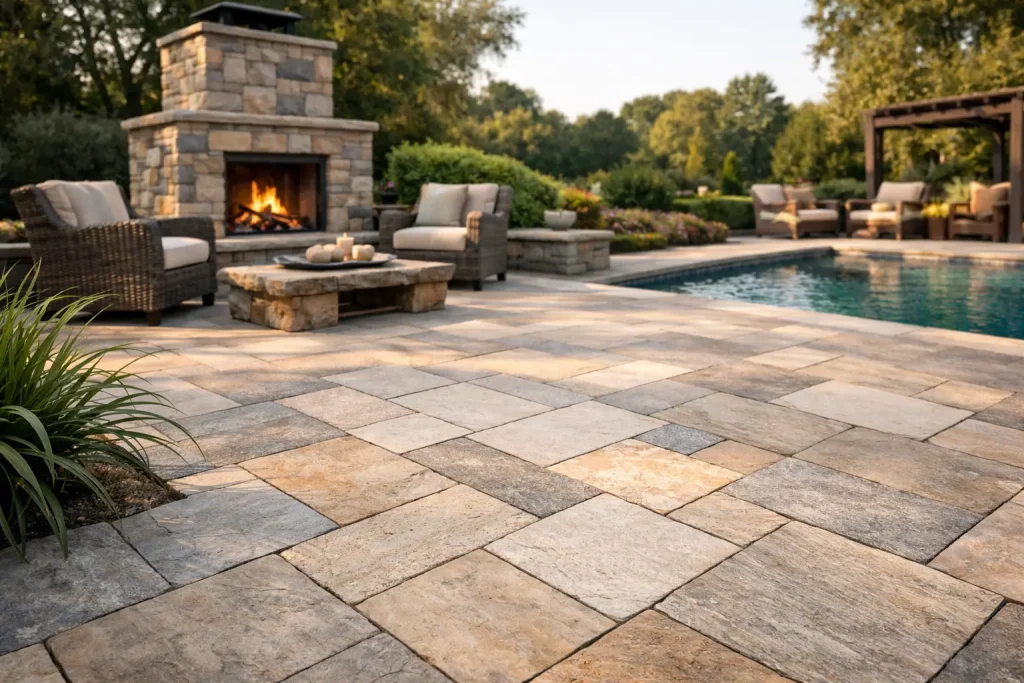
A surface can do more than finish a space. It can set the temperature of a courtyard underfoot, soften the edge of a pool, and give a garden its architectural rhythm. That is why natural stone tile pavers remain a first-choice material in well-resolved outdoor design. They are practical, yes, but their real value is in how they make a space feel – grounded, considered and built to last.
For homeowners, designers and builders, the appeal is straightforward. Natural stone carries variation that manufactured materials spend a great deal of effort trying to imitate. Subtle movement, tonal depth and tactile texture give outdoor areas a sense of permanence that feels more architectural than decorative. When the material selection is right, the result is calm rather than busy, premium rather than overworked.
Why natural stone tile pavers keep their appeal
Some materials date quickly because they follow a finish trend rather than a design principle. Natural stone tends to avoid that problem. It sits comfortably across contemporary, coastal, Mediterranean and more traditional homes because it brings an elemental quality to the project. It does not need to fight for attention.
That timelessness matters in outdoor areas, where the surrounding elements are already doing plenty. Planting changes through the seasons. Water reflects light differently throughout the day. Fire features add warmth and movement at night. A strong paving material needs to hold its own without making the space feel visually crowded.
Natural stone also ages in a way many clients find more attractive over time. With the right specification and care, it settles into the landscape rather than looking worn out by it. That distinction is important. Patina can be beautiful. Premature deterioration is not.
Choosing natural stone tile pavers for the way you live
The best selection usually starts with use, not colour. A pool terrace, front path and covered alfresco may all sit within the same project, but they perform differently. Slip resistance, heat retention, edge detailing and maintenance expectations all come into play.
Around pools, cooler underfoot stones are often preferred, especially in Queensland conditions. Texture matters too. You want enough grip for wet areas without creating a finish that feels abrasive on bare feet. For entertaining zones, format can shape the mood of the space. Larger pavers often read as cleaner and more architectural, while smaller modules or patterned layouts can feel more traditional or informal.
Then there is the question of how much visual movement you actually want. Some stones are quiet and consistent. Others are richly veined or heavily marked. Neither is inherently better. It depends on the home, the surrounding materials and how much restraint the scheme needs. In a project with strong joinery, sculptural planting and feature lighting, a calmer stone can create balance. In a pared-back setting, a more expressive stone may add exactly the depth the space is missing.
Material character matters
Travertine, limestone, marble, granite and sandstone each bring a different personality. Travertine is often chosen for its soft, classic look and comfortable feel underfoot. Limestone can be refined and understated, with a smooth visual field that works well in contemporary landscapes. Granite generally offers density and durability, making it a strong option in harder-working zones. Sandstone carries warmth and a relaxed Australian character that suits many outdoor settings.
What matters most is not following a generic rule, but matching the stone to the project conditions and design intent. A stone that looks perfect in a showroom sample may behave very differently once installed in full sun beside a pool or under heavy foot traffic near an entry.
Design decisions that change the final result
Good paving selection is rarely about the paver alone. The surrounding details shape how premium the installation feels. Joint spacing, coping profiles, step treads, border treatments and transitions to other surfaces all influence the outcome.
This is where many projects either become cohesive or start to fragment. If the pavers, wall cladding, pool coping and threshold materials are selected in isolation, the result can feel unresolved. When they are considered together, the space reads as one architectural composition.
Natural stone is especially effective here because it can be carried across multiple applications without losing sophistication. A matching or complementary stone used on paving, vertical surfaces and pool edges creates continuity without looking repetitive. The tonal relationship is what matters. Perfect uniformity is usually less interesting than a well-judged mix of related finishes.
Format, finish and edge profile
A honed finish gives a cleaner, more tailored look, while a tumbled or textured finish can feel softer and more relaxed. Drop-edge coping creates a bolder pool line. Square-set pavers can make a courtyard feel contemporary and spacious. French pattern layouts introduce movement and old-world character.
None of these decisions should be made on aesthetics alone. A highly polished finish may not suit an exposed wet area. A heavily textured surface may catch more dirt in a space that needs to stay visually crisp. The right answer usually sits where design ambition meets daily practicality.
What to expect from natural stone over time
Luxury materials still need realistic expectations. Natural stone is durable, but it is not maintenance-free, and that should not be a surprise. Sealing may be recommended depending on the stone type and application. Regular cleaning helps preserve the finish. Organic debris, pool chemicals and garden runoff can all affect appearance if left unchecked.
That said, maintenance should be understood in context. Many clients are willing to care for stone because the visual payoff is significant. The key is choosing a material whose upkeep matches the way the property will actually be used. A holiday home, a busy family backyard and a meticulously maintained architectural garden may all call for different levels of tolerance.
There is also a difference between natural variation and defect. Shade shifts, fossil markings, veining and minor surface irregularities are often part of the material’s appeal. Those characteristics are not flaws to be engineered out. They are the reason the finished space feels authentic rather than manufactured.
Natural stone tile pavers in Australian outdoor spaces
Australian homes ask a lot of outdoor materials. High UV exposure, heavy rain events, pool surrounds, entertaining areas and strong transitions between indoor and outdoor living all place specific demands on surface selection. That is one reason natural stone tile pavers continue to work so well in local projects. They offer a combination of visual depth and functional performance that suits the way we build and live.
In regions such as Brisbane, the Gold Coast, Sunshine Coast and Northern Rivers, outdoor zones are rarely secondary spaces. They are extensions of the home. A paved area may need to connect kitchen, pool, lawn and fire feature in one continuous experience. In that setting, the surface has to do more than survive the weather. It has to carry the design.
This is where curated selection becomes valuable. Rather than treating paving as a standalone trade choice, it helps to view it as part of a broader material story – earth underfoot, water nearby, fire as atmosphere, architecture tying it all together. When those elements are aligned, the result feels composed from the start.
When stone is worth the investment
Natural stone generally sits above entry-level paving in price, so the question is fair. Is it worth it? For many projects, yes – particularly where architecture, landscaping and long-term property value matter. Stone tends to elevate the entire finish of an outdoor area. It can make planting look sharper, joinery look richer and water features feel more integrated.
But value is not only about prestige. It is about choosing a material that still looks convincing years after installation. Cheap surfaces can save money upfront and cost the scheme later by making everything around them feel less resolved. Stone does the opposite when selected well.
The project does not need to be expansive for that to hold true. A compact courtyard, a refined entry path or a modest pool zone can all benefit from a smaller quantity of better material. Often, the most successful spaces are not the biggest. They are the ones where each element has been chosen with intent.
If you are comparing options, ask not only how the stone looks today, but how it will sit with the home in five or ten years. Ask how it feels underfoot in summer, how it handles wet areas, and whether its tone works with the broader palette of timber, render, metal and water. Those are the questions that lead to lasting choices.
Natural stone rewards that level of consideration. It brings weight without heaviness, texture without clutter, and permanence without looking forced. If an outdoor space is meant to feel calm, architectural and deeply liveable, it is often the material that gets you there.