
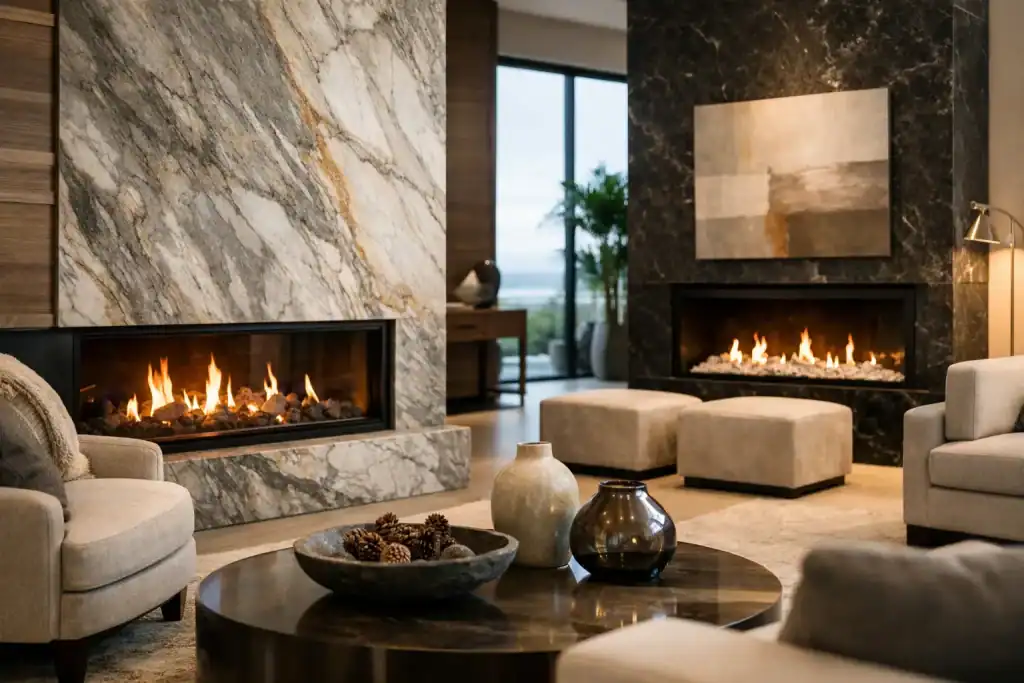
A fireplace is no longer treated as a background heating appliance. In considered residential design, it is often the element that sets the tone for an entire living space – grounding a room in natural material, creating a focal point after dark, and linking indoor comfort with outdoor living. The strongest luxury fireplace design trends favour architectural presence over decoration, with proportion, finish and flame experience carefully resolved from the outset.
For new homes and substantial renovations, the question is not simply which fireplace to choose. It is how fire will sit within the broader palette of stone, timber, metal, glazing and landscape. The most successful schemes make the fireplace feel integral to the architecture, not applied once the room is finished.
Luxury Fireplace Design Trends: More Than a Feature Wall
The oversized fireplace wall remains influential, but it has matured. Rather than a bulky black box surrounded by generic cladding, current luxury interiors use restrained forms, tactile materials and finely judged scale. A fireplace may run low and wide beneath a long stone shelf, rise through a double-height void, or sit within a monolithic plinth that also accommodates seating, storage or a television.
This is where planning matters. A fireplace wall has to perform in daylight as well as at night, with the fire off as often as it is on. Stone veining, textured cladding, limewash-like finishes and carefully detailed joinery give the composition depth without relying on flame alone.
Sculptural stone surrounds
Natural stone is central to this shift. Honed limestone, travertine, quartzite and richly veined marble can turn a fireplace into a quiet architectural anchor. The appeal is not just visual. Stone carries a sense of permanence that suits a material intended to be lived with for decades.
Large-format slabs create a calm, continuous surface with fewer visual interruptions, particularly effective in contemporary homes with generous ceiling heights. Split-face or stacked stone introduces shadow and texture, lending warmth to coastal, Mediterranean and rural settings. For a more tailored result, a simple stone hearth paired with smooth rendered walls can be just as compelling.
There is a trade-off between impact and maintenance. Highly porous natural stone may need sealing and considered cleaning, while some dramatic stones are better suited to low-contact areas than a heavily used hearth. Material selection should respond to the household, not only the image board.
The return of the hearth
The hearth is being reconsidered as a place to inhabit. Deep stone ledges, raised platforms and built-in benches create an invitation to sit close to the fire, especially in living rooms designed for long evenings and informal entertaining.
A low, horizontal hearth can visually widen a compact room. In a larger space, a raised platform helps define a conversation zone within an open plan. The proportions need discipline: an overly deep hearth can dominate circulation, while a shallow ledge may look incidental. Consider how people will walk past it, where firewood or accessories will sit, and whether children or pets will be close to the flame.
Linear flames and panoramic views
Wide linear gas fireplaces remain a favourite in contemporary luxury homes because they deliver a clean, composed flame behind a broad expanse of glass. They work particularly well beneath feature stone, within joinery, or along a wall that separates living and dining areas.
The appeal lies in the horizontal line. It echoes long kitchen islands, low furniture and expansive glazing, bringing visual balance to open interiors. A panoramic format can also make a fire feel less like an appliance and more like a source of ambient light.
Yet wider is not automatically better. In a modest room, an extra-long fireplace can flatten the wall and reduce the sense of intimacy. A compact portrait or square design may offer more presence where ceiling height is limited or where the fireplace sits between windows. Flame proportions should follow the room, not a trend.
See-through and three-sided fireplaces are also increasingly specified to connect adjacent spaces. A double-sided fire can serve a living room and dining area, or create a gentle division between a bedroom and ensuite retreat. These installations need early coordination with builders, installers and designers, as framing, ventilation, clearances and servicing access all influence the final detail.
Fireplaces that work with the Australian climate
Australian homes ask more of their fireplaces than homes in colder climates. The fire needs to provide atmosphere during mild seasons, deliver meaningful warmth when required, and complement indoor-outdoor living rather than compete with it.
Gas fireplaces offer controlled heat, immediate operation and a refined flame presentation, making them suited to main living areas and high-use entertaining spaces. Wood fireplaces bring sensory depth – radiant heat, timber scent and the ritual of building a fire – but require a practical approach to flue placement, wood storage and cleaning. They can be an exceptional choice for hinterland homes, weekend retreats and spaces where the fire is intended to be a genuine winter ritual.
Electric fireplaces have become more design-led, with convincing visual effects and flexible placement where a traditional flue is not feasible. Bioethanol designs can suit particular decorative applications, though heat output, ventilation requirements and ongoing fuel costs should be considered carefully. The right format depends on how often the fireplace will be used and what role it needs to play: primary warmth, supplementary heating, ambience, or all three.
For projects in bushfire-prone locations, fireplace selection and installation need specialist advice early. Compliance, ember protection, flue detailing and external material choices cannot be left to the final fit-out stage.
Outdoor fire zones with purpose
The outdoor fireplace is moving beyond the occasional fire pit. Luxury landscapes increasingly include defined fire zones that extend the use of terraces, pool areas and garden rooms through cooler months. A built-in fire can give an outdoor dining setting a strong focal point, while a freestanding design may better suit a flexible entertaining area.
The most resolved outdoor schemes consider fire alongside water and stone. A fireplace against natural stone cladding can feel substantial and enduring; a low fire bowl beside a pool brings a more resort-like mood. Both need thoughtful placement. Wind direction, smoke, proximity to planting, pool safety and the distance from seating all affect whether the space is genuinely comfortable.
Do not treat the outdoor fireplace as a standalone purchase. Its scale should relate to the paving, retaining walls, outdoor kitchen and furniture. A compact courtyard may need a restrained fire feature with generous clear space around it, while a large acreage setting can carry a substantial masonry structure and integrated wood storage.
Concealed technology, considered detailing
Luxury is often expressed through what is not immediately visible. Fireplace trends are favouring discreet vents, flush reveals, concealed controls and carefully integrated service access. This creates a cleaner elevation, but it requires technical planning. An installer must be able to service the unit without dismantling the fireplace wall or damaging stonework.
Televisions above fireplaces continue to be requested, although the arrangement is not always ideal. Heat management, viewing height and the visual weight of a screen all need to be assessed. In some rooms, placing the television on an adjoining joinery wall allows the fireplace to remain a purely architectural focal point. Where the two must share a wall, a recessed screen, dark finish or sliding panel can reduce visual clutter.
Lighting completes the composition. Soft wall washing across textured stone, joinery lighting beside a firebox and low-level landscape lighting around an outdoor hearth can heighten the atmosphere without overpowering the flame.
Choosing a direction for your project
The best luxury fireplace design trends are not about copying a showroom image. They are about selecting a fire type and material language that belong to the home. Start with the room’s volume, the available fuel source, the desired heat output and the way the household entertains. Then develop the fireplace alongside flooring, wall finishes and outdoor surfaces.
At HAUS Collective, the earth, fire and water relationship offers a useful way to view the project as a whole. A stone fireplace surround can echo pool coping outdoors; an outdoor fire feature can relate to paving and garden walls; a calm material palette can carry from the entry through to the living room.
A well-chosen fireplace changes the character of a home before it is ever switched on. Give it the space, materials and technical attention it deserves, and it will become the place people naturally gather.