
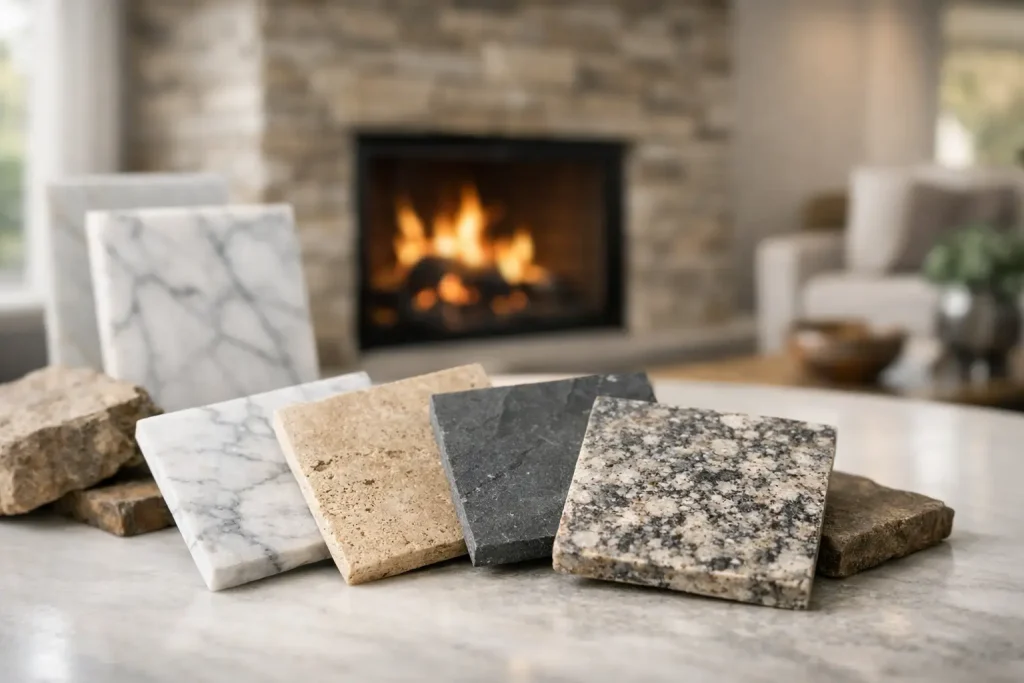
The difference between a polished bathroom floor that feels timeless and an outdoor terrace that weathers beautifully often comes down to one decision – which different natural stone tiles suit the way you actually live. Stone is never just a surface. It sets temperature, texture, mood and maintenance expectations from the outset.
For design-led homes, that choice deserves more than a quick colour match. Different stones behave differently under foot, in full sun, around pools and across open-plan interiors. The right selection creates continuity and calm. The wrong one can look beautiful on a sample and frustrating in a finished space.
How different natural stone tiles change a space
Natural stone brings variation that manufactured finishes try hard to imitate but rarely replicate. Veining, movement, tonal shifts and surface texture give a room or landscape a sense of depth that feels resolved rather than flat.
That said, not all stone reads the same way. Some types feel crisp and architectural. Others are softer, warmer or more rustic. Some are best used as a refined internal floor tile, while others are far more convincing outside, where slip resistance, heat retention and weathering matter just as much as appearance.
This is where project context matters. A stone that looks exceptional in a formal entry may not be the best option for pool coping. Likewise, a paver chosen purely for durability can miss the tone of the home if it has no relationship to the interior palette.
The main types of natural stone tiles
Marble
Marble is often chosen for its elegance, movement and light-reflective quality. It suits bathrooms, powder rooms, feature floors and statement walls where a more elevated finish is the goal. Pale marbles can make compact areas feel brighter and more expansive, while darker marbles create depth and drama.
The trade-off is that marble is generally more sensitive than denser stones. It can etch and mark more easily in some settings, particularly where acidic products or heavy wear are involved. In a low-traffic ensuite, that may be a perfectly acceptable compromise. In a busy family kitchen, it depends on how relaxed you are about natural patina.
Limestone
Limestone has a softer, more understated character. It tends to sit comfortably in homes aiming for calm, tonal spaces rather than high contrast. Many limestones work beautifully across indoor and outdoor zones because they offer a grounded, organic look without feeling overly rustic.
Underfoot, limestone often feels more relaxed than marble. Visually, it pairs well with timber, brushed metals, soft joinery colours and water features. Some varieties remain cooler in outdoor conditions, which makes them particularly appealing around pools and entertaining areas in warm climates.
Travertine
Travertine is a classic choice for both indoor and outdoor applications. Its naturally pitted structure and warm tonal range give it a casual, Mediterranean quality that works especially well in alfresco spaces, pool surrounds and courtyards.
Filled and honed travertine can appear more refined indoors, while tumbled or textured finishes feel more at home outside. Travertine is versatile, but selection still matters. Some cuts feel contemporary and clean, while others lean more traditional. If the home architecture is sharp and minimal, the wrong travertine can feel visually out of step.
Granite
Granite is valued for density and durability. It tends to suit high-wear areas, external paving and spaces where a harder-wearing stone is needed. A flamed or textured granite can provide grip and a more architectural appearance, while honed options can feel sleek and restrained.
Compared with limestone or travertine, granite often presents a cooler, more structured aesthetic. That can be exactly right for contemporary homes with strong lines and darker material palettes. It is less about softness and more about precision.
Slate
Slate brings texture, tonal variation and a slightly more rugged edge. It can work well in outdoor areas, entries, garden paths and some interior feature applications where a layered, natural look is wanted.
Its strength is character. Its challenge is that character needs to be controlled. In a highly refined interior, slate can feel too visually busy if the surrounding materials are also competing for attention. Used selectively, it adds richness and depth.
Sandstone
Sandstone is often associated with warmth and a distinctly Australian outdoor sensibility. It sits naturally within landscape design and can be particularly effective for paving, walling and pool areas where a softer, sun-washed palette is preferred.
Not every sandstone is suited to every application, and the finish plays a large role in performance. But for projects aiming to connect architecture with garden and outdoor living, sandstone has an ease that feels very local and very liveable.
Choosing by finish, not just by stone type
When clients compare different natural stone tiles, they often start with colour. That is understandable, but finish is just as important. The same stone can feel entirely different depending on whether it is honed, polished, brushed, tumbled or split-faced.
A polished finish reads more formal and reflective, but it may not be suitable where slip resistance is a priority. Honed stone is softer and more contemporary, often a strong choice for internal floors and walls. Tumbled or brushed finishes introduce texture and a more relaxed character, which can be ideal in outdoor and transitional spaces.
This matters most when you are trying to create continuity across a home. Using the same stone in two different finishes can sometimes achieve a more resolved indoor-outdoor connection than using two separate materials that only loosely relate.
Matching stone to the way the space is used
Beautiful selection starts with practical honesty. A guest powder room, a family kitchen, a sunny courtyard and a pool edge do not ask the same things of a surface.
For interiors, think about traffic, cleaning routines and the overall visual weight of the room. Lighter stones can open a space, but they may show more variation or wear depending on the finish. Darker stones can feel sophisticated, though they may also make smaller rooms feel heavier if there is limited natural light.
For exteriors, grip, heat, drainage and long-term weathering become more significant. Around pools, the stone needs to feel good under bare feet and sit comfortably with water, landscaping and strong sun. In entertaining areas, texture and maintenance often matter more than a showroom-perfect appearance.
There is no universal best option. There is only the right option for a specific project, budget and appetite for upkeep.
Design cohesion across earth, fire and water
The strongest projects do not treat stone as an isolated category. They use it to anchor a broader material language across the home. That might mean pairing a warm limestone floor with a sculptural fireplace surround, or extending a travertine palette from interior living spaces out to the pool terrace.
Stone is especially effective when it creates a quiet link between architecture and lifestyle elements. Water features, outdoor showers, fireplaces and bath pieces all sit more confidently when the surrounding surfaces have been chosen with the same level of intention.
This is often where a curated selection makes a real difference. Instead of choosing each product in isolation, the project starts to feel composed – less like a series of decisions, more like one clear point of view.
What to ask before you commit
Before selecting stone, ask how much variation you are comfortable with. Natural stone is not uniform, and that is part of its appeal. But some people love movement while others want a quieter, more consistent look.
It is also worth asking how the stone will age. Some surfaces develop a patina that adds charm. Others need more regular sealing or care to maintain a crisp finish. Neither outcome is wrong, but expectations should match reality.
Finally, consider the scale of the tile or paver. Larger formats can feel cleaner and more contemporary, especially in open-plan homes. Smaller formats or French patterns can introduce rhythm and softness, but they may suit certain architectural styles better than others.
In practice, this is why showroom viewing remains valuable. Stone needs to be seen at scale, in natural light and alongside the other finishes in the project. For homeowners and trade professionals across Brisbane, the Gold Coast, Sunshine Coast and Northern Rivers, that side-by-side comparison often saves costly second-guessing later.
Natural stone rewards considered selection. Choose with the space, the light and the lifestyle in mind, and the result will feel settled for years rather than simply on trend for now.