
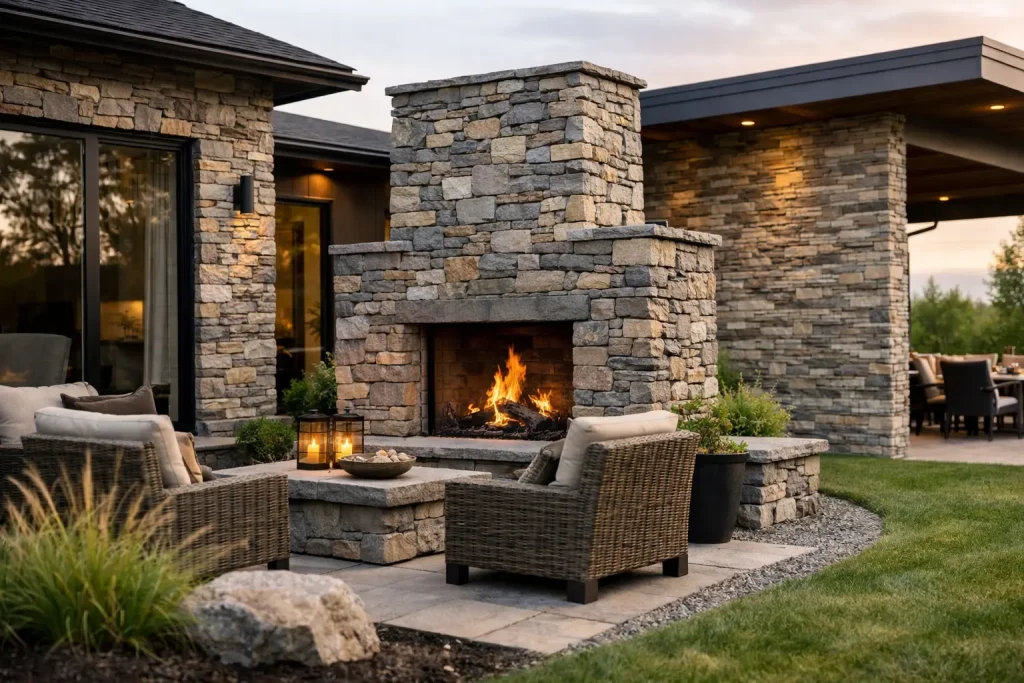
A well-chosen exterior finish changes the way a home is read before anyone steps inside. Stone wall cladding exterior applications do that particularly well – adding depth, permanence and a level of material richness that paint, render and lightweight panels rarely match.
For new builds and renovations alike, the appeal is not only visual. Natural stone brings texture, tonal variation and architectural weight, but it also asks for considered decisions around format, finish, placement and maintenance. The best result is never just about choosing a stone you like in a showroom. It is about choosing the right stone for the style of home, the surrounding landscape and the way the surface will age in real conditions.
Why stone wall cladding exterior projects feel more resolved
Stone has a grounding effect on architecture. It gives clean modern forms more warmth, adds credibility to coastal and hinterland homes, and helps larger facades feel layered rather than flat. Even when used sparingly – on an entry wall, a front fence or an outdoor room – it creates a clear focal point.
This is one of the main advantages of cladding rather than solid stone construction. You get the visual impact of stone without the mass and cost associated with full-depth masonry. That makes it a practical option across a wider range of residential projects, from feature columns to expansive boundary walls.
There is also a quality to natural material that manufactured finishes often struggle to replicate. Variation in face texture, edge detail and colour gives the wall movement. In strong Australian light, that difference becomes even more apparent. A flat finish can feel stark by mid-afternoon. Stone tends to become more expressive.
Choosing the right style of stone wall cladding exterior
The right cladding depends on the architectural language of the project. There is no single best option, only the most suitable one.
For contemporary homes, sawn or split-face stone in linear formats usually works best. These profiles create a more refined surface and sit comfortably alongside large glazing, metalwork and minimalist landscaping. The look is controlled, but still tactile.
For homes with a more organic or regional character, random ashlar and irregular formats can feel more natural. They suit garden walls, pool surrounds, outdoor fireplaces and facades where a little softness is welcome. This style often works particularly well when the house is intended to sit into the landscape rather than stand apart from it.
Colour matters just as much as format. Cooler greys and charcoals can sharpen a contemporary elevation, while warm beige, sandy tones and soft taupes tend to create a more relaxed outdoor feel. In coastal settings, heavily yellow or orange stone can sometimes feel out of place unless the rest of the palette supports it. In lush subtropical gardens, a slightly weathered, earthy tone often settles more comfortably.
Where stone cladding makes the strongest impact
Not every exterior wall needs stone. In many projects, restraint gives a better result.
Front entries are an obvious and effective placement. Stone can frame a doorway, wrap a portico or anchor a feature wall visible from the street. This creates presence without overwhelming the facade.
Boundary walls and front fencing are another strong use case. Because these elements sit close to the eye, the texture of the stone becomes part of the arrival experience. It also helps tie the landscape and built form together from the outset.
Around alfresco spaces, stone cladding can make outdoor rooms feel more architectural and complete. Used on outdoor kitchens, fireplace surrounds or privacy walls, it introduces material continuity that reads as more deliberate than painted block or plain render.
There is a trade-off, though. Too many separate stone moments across one home can start to look repetitive or forced. A better approach is to decide where stone should lead the composition, then let simpler finishes support it.
Natural stone versus manufactured alternatives
This is usually where budgets and expectations meet reality. Natural stone carries a premium, but it also offers something difficult to fake – authenticity in tone, texture and long-term character.
Manufactured cladding products can reduce upfront cost and may suit projects where weight, consistency or program constraints are a priority. They are often easier to standardise across large areas. But they can also look more repetitive, and the finish may not hold the same visual depth over time.
Natural stone tends to reward close attention. The face variation, subtle imperfections and tonal shifts are part of the appeal. On a high-end residential project, those details matter. They are often what separates a surface that looks styled from one that feels genuinely architectural.
That said, natural stone is not a universal answer. If the home relies on very crisp detailing, a heavily textured or irregular stone may create too much visual noise. If the budget is being stretched elsewhere, it may be better to use stone in one defined area rather than compromising with a lower-grade selection across the entire facade.
Performance matters as much as appearance
A beautiful stone choice can still disappoint if it is wrong for the site or poorly installed. Exterior walls deal with sun, moisture, dust and temperature variation, so practical suitability should always be part of the selection process.
Some stones are denser and more resilient in exposed conditions. Others are better suited to sheltered vertical applications. The finish also affects performance. A split-face profile gives dramatic texture, but it can catch more dust and debris than a smoother sawn finish. Lighter stones may stay cooler visually and thermally, while darker stones can create a more dramatic facade but absorb more heat.
This is where project context matters. A coastal property may need extra attention to salt exposure and maintenance. A hinterland site with established trees may suit a more rustic stone that benefits from natural weathering. In urban settings, the interaction between stone, metal, timber and glazing is often the bigger design question.
Installation quality is non-negotiable. Even exceptional material can look ordinary if the coursing is inconsistent, corners are unresolved or joints are poorly handled. Stone should feel intentional and well composed, not simply applied.
How to coordinate stone with the rest of the exterior palette
Stone rarely works in isolation. It performs best when the surrounding materials are edited rather than competing.
If the cladding has strong variation, keep adjacent finishes quieter. Clean render, restrained brickwork, muted timber and dark metal detailing often allow the stone to hold visual focus. If the stone is subtle and tonal, there may be more room for contrast elsewhere, such as bronzed glazing frames, off-form concrete or a bold front door colour.
Landscape design should be part of the conversation early. Stone wall cladding exterior schemes often look strongest when the same material language appears somewhere beyond the facade – perhaps in a garden wall, pool coping, steppers or paving. That does not mean matching everything exactly. It means creating a relationship between architecture and site.
This is also where premium material selection has an advantage. When stone, fire features and water elements are considered together, the result feels more complete. The home reads as a whole rather than a series of separate decisions.
Common mistakes to avoid
The first is choosing stone purely from a small sample. Stone needs to be viewed at scale, ideally in natural light, because variation is part of the product. A sample can show colour and texture, but not the full character of a wall.
The second is ignoring proportion. A small-format stone on a large two-storey facade can feel fussy. An oversized, heavily textured cladding on a compact frontage can overwhelm the architecture. Matching scale to the building is essential.
The third is treating maintenance as an afterthought. Natural stone is durable, but it is not maintenance-free. Some finishes and colours will show dirt more readily. Some applications may benefit from sealing depending on the stone type and exposure. Honest planning at the start avoids disappointment later.
Finally, there is the issue of trend-driven selection. Very cool greys, extremely busy mixed stones or overly rustic profiles can date quickly if they are not aligned with the architecture. Better to choose a stone with lasting restraint than one that only works for the current mood board.
A more considered way to specify exterior stone
The best projects usually begin with a simple question: what role should the stone play here? Should it anchor the house, soften it, connect it to landscape, or create a standout feature at the point of arrival?
Once that is clear, the right material decisions follow more easily. Format, tone, finish and placement all become part of a cohesive design move rather than isolated product choices. For homeowners, builders and designers working across Brisbane, the Gold Coast, Sunshine Coast and Northern Rivers, that kind of clarity matters even more in exterior conditions where light, climate and landscape shape the final result.
A refined stone wall does not need to shout. When the material is chosen well and placed with intent, it gives the architecture something more valuable than novelty – a sense of permanence.