
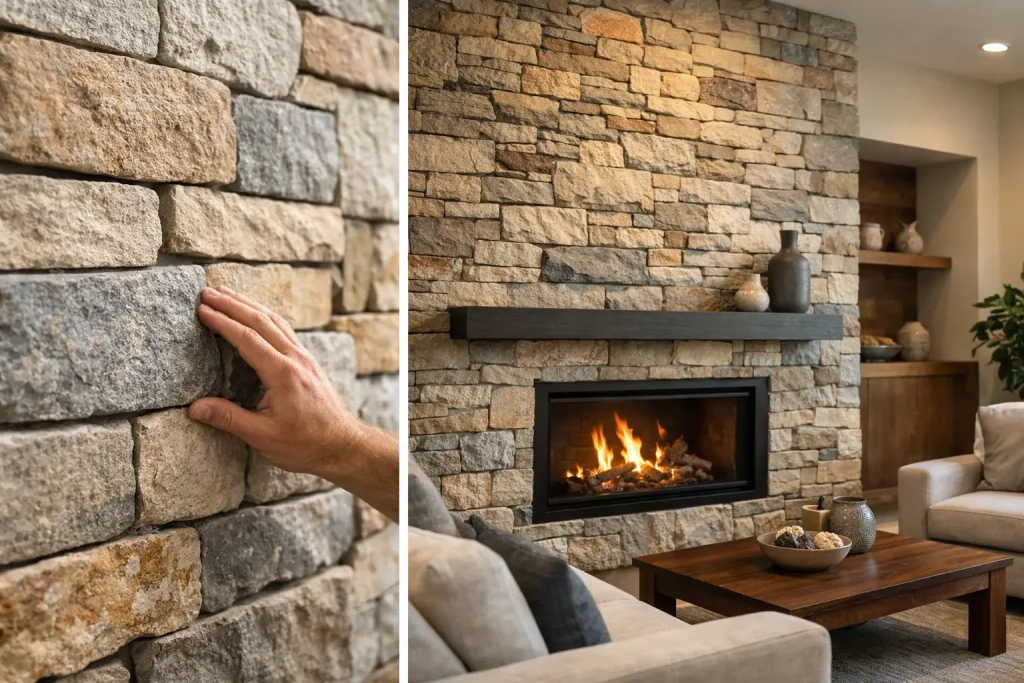
A plain rendered wall can do its job perfectly well, but it rarely changes the feeling of a space. Stone does. If you have been asking what is stone wall cladding, the short answer is this: it is a layer of natural or manufactured stone applied to a wall surface to create the look and texture of solid stone without building the entire wall from full-depth masonry.
That distinction matters. Cladding gives you the character, depth and material presence of stone in a format that is generally lighter, more versatile and easier to integrate into contemporary builds and renovations. Indoors, it can anchor a fireplace wall or add weight to an entry. Outdoors, it can transform a facade, retaining wall, outdoor room or pool zone into something more architectural.
What is stone wall cladding and how does it work?
Stone wall cladding is a facing material fixed to a structural substrate such as concrete, masonry or a properly prepared framed wall. Rather than stacking full blocks of stone to create structure, the wall itself does the structural work and the cladding provides the finish.
Natural stone cladding is commonly cut into thinner pieces or modular formats so it can be installed efficiently while still showing the texture, variation and irregularity people want from real stone. Depending on the product, pieces may be loose-laid by a stonemason, or supplied as interlocking panels for a cleaner installation process.
The result can range from crisp and contemporary to rustic and heavily textured. That depends on the stone type, the way it is split or sawn, the joint detail, and the overall scale of the wall. A limestone cladding in large horizontal formats reads very differently from a rugged dry-stack quartz panel, even though both fall under the same category.
Why stone wall cladding is used instead of full stone walls
For most residential projects, cladding is the practical choice. Full-depth stone walls are beautiful, but they are heavier, more labour-intensive and usually more expensive once structure, footings and installation are considered.
Cladding delivers much of the same visual outcome with fewer constraints. It can be used on internal feature walls, fireplace surrounds, exterior facades, boundary walls, columns and landscape elements where a full masonry build may be unnecessary or unrealistic.
This is also why stone wall cladding suits both new homes and renovations. You can introduce the richness of natural stone into an existing space without rebuilding the wall from scratch. For design-led projects, that flexibility is often the real value.
The main types of stone wall cladding
There is no single look called stone cladding. The category is broad, and the right selection depends on the architecture, the setting and how refined or organic you want the finish to feel.
Natural stone cladding
Natural stone cladding uses real stone such as limestone, quartz, travertine, sandstone, slate or marble. Each has its own colour movement, surface texture and geological character. This is where much of the appeal lies. No printed surface can fully replicate the depth and variation of authentic stone.
Natural stone is often chosen for premium residential work because it adds visual permanence. It feels grounded and considered, particularly when paired with timber, concrete, glass and water features.
Stone panels and loose stone pieces
Some cladding is supplied in panels, which can create a more uniform layout and often help streamline installation. Other products come as individual pieces, allowing a stonemason to compose a more customised pattern.
Panels can suit modern projects where consistency matters. Loose pieces can be ideal when you want a more organic, hand-laid finish. Neither is automatically better. It depends on the design language of the home and the level of craftsmanship built into the budget.
Dry-stack and grouted finishes
Dry-stack cladding is installed with minimal visible joints, creating a dense, layered look. It tends to feel contemporary, architectural and textural.
Grouted stone cladding introduces a visible joint between stones. This can soften the look, give more definition to each piece and suit certain rural, coastal or classic styles. Again, it is a design decision rather than a technical hierarchy.
Where stone wall cladding works best
The strongest stone applications usually have a purpose beyond decoration. They anchor a volume, frame a feature or connect the house to the landscape.
Inside the home, stone wall cladding is often used around fireplaces, in entry voids, behind staircases or as a feature wall in open-plan living areas. In these spaces, stone adds weight and calm. It can make a room feel more resolved, especially when the rest of the palette is restrained.
Outside, cladding works beautifully on facades, front entries, garden walls, outdoor kitchens and poolside structures. It is especially effective where the architecture needs texture or contrast. A home with large smooth surfaces can benefit from one grounded stone element that gives the whole project more depth.
For properties across Brisbane, the Gold Coast, the Sunshine Coast and Northern Rivers, material selection matters even more outdoors. Sun exposure, moisture, salt air and maintenance expectations should all be considered before choosing a stone and finish.
What to consider before choosing stone wall cladding
This is where the answer to what is stone wall cladding becomes more useful in practice. Knowing the definition is one thing. Choosing the right product is another.
Stone type and finish
Some stones are softer and more porous than others. Some have dramatic movement, while others are quieter and more tonal. A heavily split surface may look stunning in the right setting, but it will cast stronger shadows and catch more dust than a smoother sawn finish.
For indoor applications, this may be largely aesthetic. For outdoor areas or high-contact zones, practicality starts to matter more.
Weight and substrate
Even though cladding is lighter than full stone construction, it is still a substantial material. The wall system beneath it must be suitable, and installation details must be resolved properly. Corners, cappings, expansion considerations and moisture management all affect the final result.
This is not usually a category for guesswork. The most successful projects are the ones where the material is selected early enough to coordinate with the builder, designer or installer.
Scale of the space
A stone that looks balanced on a large exterior wall may feel too busy in a compact powder room. Likewise, a subtle linear limestone can disappear on a broad facade if the home needs more visual contrast.
Scale changes everything. It is worth looking at larger samples and, where possible, viewing installed examples rather than relying on a small offcut.
Colour and surrounding materials
Stone should be selected as part of a broader palette, not in isolation. Roof colour, window frames, flooring, joinery, paving and pool surrounds all influence whether the wall feels cohesive.
This is one reason design-aware clients often prefer curated stone ranges rather than endless generic options. Good selection is not about more choice. It is about better choice.
Is stone wall cladding expensive?
It can be, but the answer depends on the stone, the format and the installation complexity. Material cost is only one part of the equation. Labour, substrate preparation, corner detailing, access and sealing can all influence the final figure.
Natural stone cladding usually sits in the premium end of the market compared with simple painted or rendered finishes. That said, it offers a different result entirely. It is not just a wall covering. It is an architectural surface with long-term visual value.
If the project calls for one standout material moment rather than stone everywhere, using cladding strategically often gives the best return. A single fireplace wall, front entry blade wall or outdoor entertaining backdrop can shift the whole tone of a home.
Does stone wall cladding need maintenance?
Less than many people expect, but not none. Natural stone benefits from sensible care, and some products may require sealing depending on the stone type and where it is installed.
Exterior walls may collect dust, organic matter or water marks over time. Lighter stones can show this more readily than darker ones. Textured finishes also behave differently from smoother surfaces. Maintenance is usually manageable, but it should be part of the conversation at selection stage rather than an afterthought.
This is also where quality matters. Well-selected stone, properly installed, tends to age with grace. Poor product choice or rushed installation tends to show up quickly.
When stone wall cladding is the right choice
Stone cladding is right when you want material depth, permanence and a stronger connection between architecture and landscape. It is especially effective in homes that balance clean lines with natural texture, or in outdoor spaces where the palette needs warmth and structure.
It may be less suitable if the budget is tight, the substrate is unsuitable, or the aesthetic calls for something very minimal and flat. Good design is not about forcing stone into every project. It is about knowing when stone will do something other materials cannot.
At its best, stone wall cladding gives a home a sense of quiet confidence. It does not need to shout. It simply changes how the space feels the moment you arrive.