
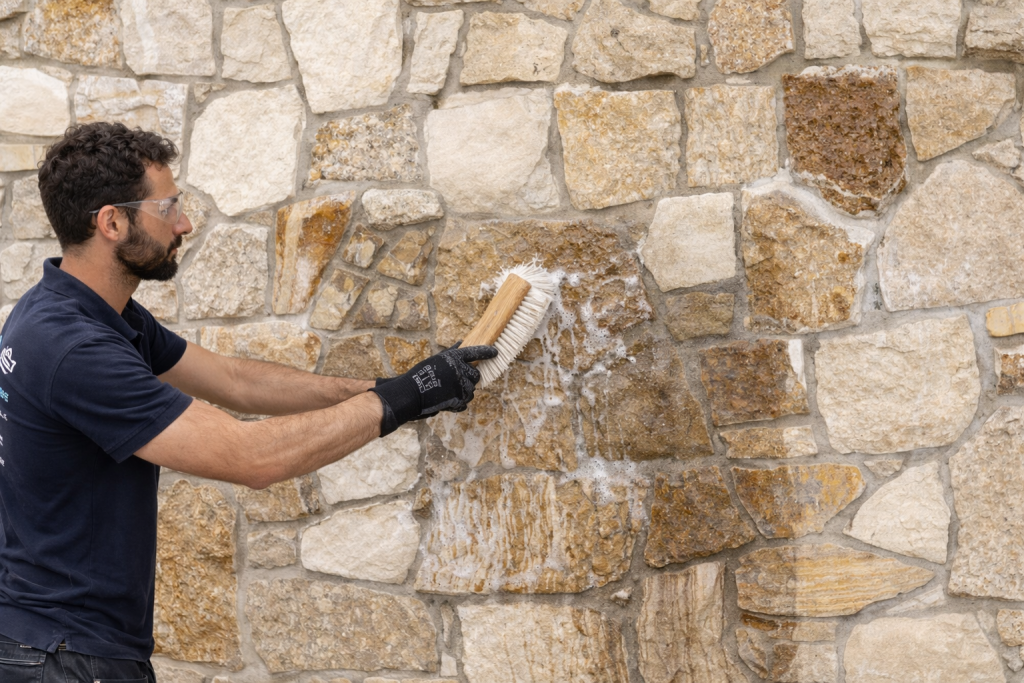
Stone wall cladding rarely looks tired all at once. More often, it happens gradually – a soft film of dust across the surface, darker marks around garden beds, a little algae in shaded areas, or soot collecting near an outdoor fireplace. If you are wondering how to clean stone wall cladding without dulling its character, the right approach is gentle, consistent and specific to the stone itself.
Natural stone is valued for variation, texture and depth. Those same qualities also mean it can trap dirt differently from a flat painted wall or porcelain surface. Good cleaning is less about harsh products and more about preserving the finish, the joints and the natural beauty that made the material worth choosing in the first place.
How to clean stone wall cladding without damage
The safest way to clean stone wall cladding is to start dry, use the mildest effective solution, and avoid anything acidic or overly abrasive. That sounds simple, but it matters. Many common household cleaners are too aggressive for natural stone and can etch the surface, strip sealers or discolour mortar joints.
Before you begin, identify whether the cladding is installed indoors or outdoors, whether it has been sealed, and what type of stone you are working with. Dense stones can tolerate a little more moisture than highly porous materials, while textured split-face cladding needs a lighter hand than a honed finish because grime can sit deeper in the surface.
If you are unsure of the stone type, treat it conservatively. Warm water, a soft brush and a pH-neutral stone cleaner are usually the safest place to start.
Start with a gentle dry clean
Dust, loose grit and cobwebs should come off before any water goes near the wall. Use a soft broom, microfibre cloth or vacuum with a brush attachment to remove surface debris. This step is easy to skip, but it makes a difference. If you scrub wet dirt straight into the face of the stone, you can create muddy streaks and push grime further into textured areas.
For interior cladding, dry cleaning may be enough for routine maintenance. In living areas, entry walls and feature spaces, a regular dusting keeps the stone looking crisp and prevents build-up that later needs a heavier clean.
Use warm water and a pH-neutral cleaner
When the wall needs more than a dust-off, mix warm water with a stone-safe pH-neutral cleaner according to the product instructions. Apply it with a soft sponge or cloth for smoother stone, or a soft-bristled brush for rougher profiles. Work in small sections so the cleaner does not dry on the surface.
Scrub lightly rather than aggressively. The goal is to lift dirt, not scour the face of the stone. Once cleaned, rinse with fresh water and dry with a clean cloth if the wall is indoors. On exterior walls, allow the surface to air dry naturally.
If the cladding has deep texture, you may need a second pass. That is normal. Two gentle cleans are better than one harsh one.
What to avoid when cleaning stone cladding
Natural stone has a premium feel because it is a genuine material, not a printed imitation. It also comes with material-specific care requirements. The wrong cleaner can do visible damage surprisingly fast.
Avoid acidic products such as vinegar, lemon-based cleaners and many bathroom sprays. These can react with calcium-based stones and leave dull patches or etched marks. Bleach should also be used with care, especially on natural stone and surrounding grout or mortar, because it can cause fading or uneven colour change.
Pressure washers are another area where caution matters. A light rinse may be acceptable on some robust exterior stonework, but high pressure can damage joints, force water behind the cladding or roughen softer stone faces. If you do use one, keep the pressure low, stand well back and test in an inconspicuous spot first.
Wire brushes, abrasive pads and harsh scouring powders are best avoided. They can scratch the surface and leave the stone looking flatter and less refined than it should.
Removing common stains from stone wall cladding
Not every mark on stone is the same, so cleaning methods should match the source of the stain. This is where many people go wrong. A general cleaner is ideal for routine dirt, but stubborn marks usually need more targeted treatment.
Mould, algae and mildew
Outdoor stone wall cladding in shaded or damp areas can develop green or black growth over time. This is common around retaining walls, pool zones, garden edges and south-facing walls with limited sun.
Start by brushing away loose growth while the surface is dry. Then use a stone-safe cleaner designed for biological staining, following the label directions carefully. Let it dwell for the recommended time, gently agitate with a soft brush, and rinse thoroughly. If the growth returns quickly, the issue may be more about moisture and airflow than cleaning alone.
Soot and smoke residue
Cladding around fireplaces and outdoor fire features often collects soot, especially on lighter stone. Dry soot should be removed carefully first with a vacuum or dry cloth so it does not smear. After that, use a pH-neutral stone cleaner and a soft sponge.
If soot has built up over time, you may need a specialist stone degreaser or professional help. Smoke residue can be oily, and overworking it with water alone often spreads the stain rather than lifting it.
Rust, tannin and organic stains
Planters, metal fixtures and leaf litter can all leave marks on outdoor cladding. Rust needs a rust remover made specifically for natural stone. Organic stains from leaves or mulch may respond to a stone-safe cleaner, but some will need a poultice or targeted treatment.
This is one of those it-depends situations. The same reddish mark could be rust, clay splash or iron within the stone reacting to moisture. If the cause is unclear, test a small area first rather than guessing with a strong product.
Indoor versus outdoor care
The cleaning rhythm for stone wall cladding changes depending on where it is installed. Indoor feature walls usually need less intervention but benefit from regular light maintenance. Outdoor walls face more variables – rain splash, irrigation, pollen, leaf tannins, pool chemicals and general weathering.
Inside the home, a soft dust every few weeks and an occasional wipe with a damp cloth is often enough. In kitchens or near fireplaces, clean a little more often so oils or soot do not settle into the surface.
Outside, inspect the wall seasonally. After a wet spell, check for algae or darkened patches. After garden work, rinse away mud splashes before they bake on. In coastal settings, a fresh water rinse from time to time can help reduce salt build-up, though the right frequency depends on exposure and the stone selected.
Does sealed stone need cleaning?
Yes – sealing helps, but it does not make stone maintenance-free. A good sealer reduces absorption and gives you more time to clean spills or surface staining, but dirt still settles on the face of the stone and textured profiles still hold dust.
If your cladding is sealed, stick with stone-safe products so you do not degrade that protective layer. If water no longer beads or the stone seems to darken quickly when wet, it may be time to assess whether resealing is needed. That is particularly relevant for exterior cladding exposed to strong sun and heavy rain.
Sealing also depends on the finish and location. Some natural stones benefit greatly from it, while others may not require the same level of treatment. Product selection at the start of a project matters here, which is why material advice is as valuable as the stone itself.
When professional cleaning is the better option
There is a point where careful DIY cleaning stops being the smart choice. If the wall has widespread staining, heavy efflorescence, ingrained soot, mortar haze or signs of moisture issues behind the cladding, professional assessment is worth it.
This is especially true for premium architectural stone, large-format feature walls or custom builds where replacement is neither simple nor inexpensive. Professionals can identify whether the issue is surface-level, installation-related or linked to drainage, sealing or adjacent materials.
For homeowners and trade professionals planning projects across Brisbane, the Gold Coast, Sunshine Coast or Northern Rivers, climate exposure also plays a role. Subtropical humidity, poolside conditions and shaded garden zones can all affect how often stone needs attention and what cleaning method will be most effective.
Keeping stone wall cladding looking refined
Routine care is what preserves the visual payoff of natural stone. Clean gently, deal with marks early, and resist the urge to throw strong chemicals at every stain. Stone rewards restraint.
A well-chosen cladding material should age with character, not neglect. When cleaning respects the nature of the stone, the wall keeps its depth, texture and architectural presence for years to come. If you are investing in a premium finish, that kind of care is part of the design story.