
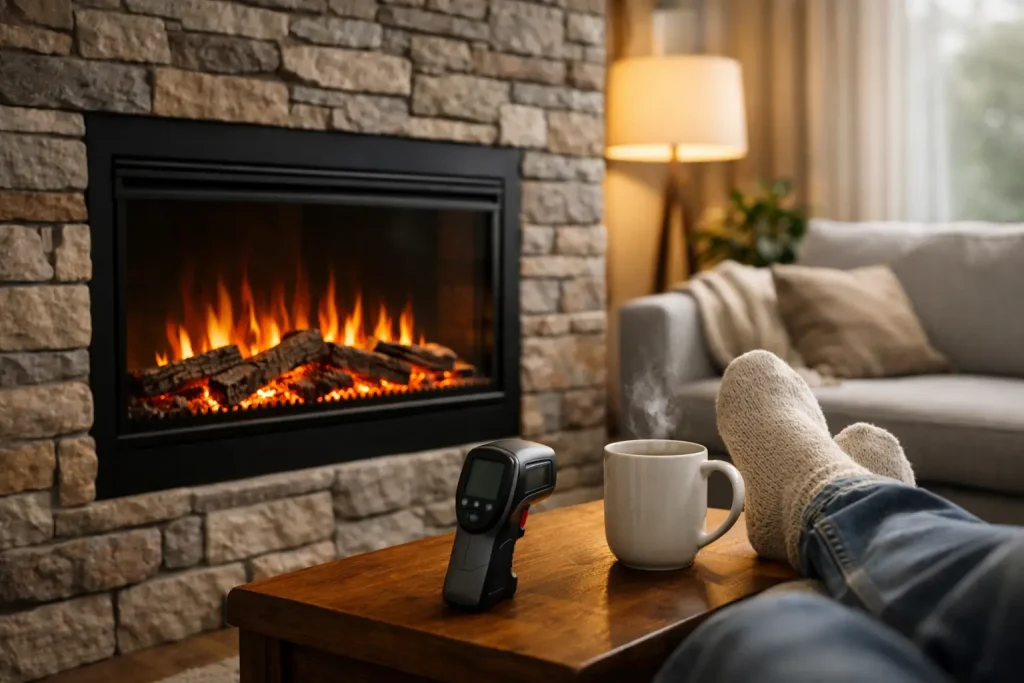
If you love the look of a fireplace but do not want the complexity of flues, fuel storage or major building work, the obvious question is simple: do electric fireplaces heat rooms in a meaningful way, or are they mostly visual? The short answer is yes, they do heat rooms – but the real answer depends on room size, insulation, ceiling height and what you expect the fireplace to do.
For many Australian homes, an electric fireplace works best as a practical room heater wrapped in a design feature. It can take the chill out of a living space, add comfort to a bedroom or media room, and create the presence of fire without the mess of wood or the installation demands of some other fireplace types. What it will not usually do is behave like a whole-home heating system.
Do electric fireplaces heat rooms or just look good?
A quality electric fireplace does both. The flame effect is visual, but the heat is real. Most models use an internal electric heater with a fan to push warm air into the room, much like a discreet built-in heater. That means the experience is different from a traditional wood fireplace, where radiant heat from the firebox and surrounding materials can feel more enveloping.
This distinction matters in design-led homes. If your priority is atmosphere first and heating second, electric can be an elegant solution. If your priority is strong heat output across a large, open-plan area, you need to look more carefully at the specifications and the room itself.
In practical terms, most electric fireplaces are suited to small to medium rooms. In a well-insulated space, they can make a noticeable difference quite quickly. In a large living area with raked ceilings, expansive glazing and frequent door openings, the effect may be more modest.
How much heat can an electric fireplace produce?
Most residential electric fireplaces available in Australia operate around 1.5kW to 2kW of heat output. That puts them in the same general territory as many portable electric heaters, but with a far stronger architectural presence.
What this means in day-to-day use is fairly straightforward. In a bedroom, study, sitting room or average lounge, an electric fireplace can provide comfortable supplementary heat. In a large open-plan kitchen, dining and living zone, it may warm the immediate area rather than the entire footprint.
The phrase supplementary heat is worth paying attention to. Electric fireplaces are excellent for zone heating – warming the room you are actually using instead of heating the whole house. For many households, that is more efficient and more appealing than running central heating for hours.
What affects how well an electric fireplace heats a room?
Heat output is only part of the story. The room itself often determines whether the fireplace feels highly effective or only mildly helpful.
Room size is the first factor. A compact insulated room naturally holds warmth better than a sprawling open-plan space. Ceiling height matters too. Warm air rises, so a standard-height room will typically feel comfortable sooner than a voided living area or a room with dramatic cathedral ceilings.
Insulation and glazing make a substantial difference. A well-built home with good insulation and quality window coverings will retain heat more effectively. Older homes with draughts, single glazing or gaps around doors may lose warmth almost as quickly as it is produced.
Placement also plays a role. A recessed or wall-mounted electric fireplace installed in the main occupied part of the room will generally feel more useful than one positioned purely for symmetry in a less practical location. In design terms, the best result often comes when aesthetics and thermal logic are considered together.
Are electric fireplaces good for open-plan living?
They can be, but expectations need to be realistic. In many contemporary homes, the main living zone is large, open and connected to outdoor areas. That creates a beautiful sense of volume and light, but it is harder to heat with any single appliance.
An electric fireplace in this setting is often best viewed as localised comfort rather than whole-space heating. If the seating area is arranged around the fireplace, it can make that zone feel warmer and more inviting, even if the far side of the room remains cooler. This is one reason electric fireplaces are so popular in living rooms and media spaces where ambience and comfort overlap.
For architects, designers and renovators, this is where specification matters. A fireplace chosen purely by visual width or flame style may underperform if the room is expansive. A more informed selection considers heat capacity, installation style and how the room is actually lived in.
The main trade-off: convenience versus heating power
Electric fireplaces are appealing because they are clean, simple and visually versatile. They usually do not require a flue, and installation is generally more straightforward than wood or petrol alternatives. For many projects, especially renovations, apartments or homes where structural changes are limited, that is a major advantage.
The trade-off is that electric heat is typically less powerful than high-output wood or petrol fireplaces designed to warm larger areas. You gain ease, flexibility and refined presentation, but in some spaces you give up heating intensity.
That does not make electric the lesser option. It simply makes it the right option for certain briefs. If the goal is an elegant built-in feature with genuine heat, low maintenance and year-round flame effect, electric is often an excellent fit. If the goal is powerful heat for a substantial family zone during the coldest winter evenings, another fireplace type may be more suitable.
When do electric fireplaces make the most sense?
They are particularly well suited to rooms where visual impact matters as much as comfort. Bedrooms, formal sitting rooms, studies, apartments, renovated living rooms and new builds with a minimalist aesthetic all lend themselves well to electric models.
They also suit clients who want precise control. Most units offer adjustable heat settings, remote operation and flame-only mode, so you can enjoy the look of fire without heat when Brisbane or the Northern Rivers are giving you a milder evening. That flexibility is part of their appeal in the Australian climate, where a fireplace often needs to contribute ambience outside peak winter too.
In practical renovation terms, electric fireplaces can also simplify planning. There is less mess, less infrastructure and often more freedom around where the feature wall can sit. For projects balancing premium finish with construction efficiency, that can be a compelling advantage.
Do electric fireplaces cost a lot to run?
Running cost depends on your electricity tariff, how often you use the heat function and whether you run the fireplace at full output. The flame effect alone generally uses far less power than the heater, so the visual component is relatively economical.
When the heater is on, an electric fireplace performs much like other electric heating appliances of similar wattage. That means it can be sensible for short, targeted heating sessions, especially in occupied rooms. It is usually less sensible as an all-day solution for very large or poorly insulated spaces.
This again comes back to using the product in the way it performs best. If you want occasional, responsive warmth and a strong design statement, running costs are often reasonable. If you expect it to continuously heat a vast open-plan home, the economics may be less attractive.
Choosing the right electric fireplace for real heat
If heating performance matters, do not choose on appearance alone. Look closely at the rated heat output and ask whether it aligns with your room dimensions. Consider how insulated the room is, whether the ceiling is standard height and whether the fireplace is expected to heat one zone or an entire connected space.
It is also worth considering the broader interior scheme. An electric fireplace can sit beautifully within stone, joinery or plaster detailing, becoming part of a more resolved architectural composition rather than an add-on. For many clients, that balance of function and finish is exactly the point.
A well-selected model can absolutely warm a room. It can also anchor a living space, soften a pared-back interior and make a home feel more settled in winter. Those outcomes are not separate from performance – they are part of it.
So, do electric fireplaces heat rooms? Yes, often very effectively within the right setting. The key is matching the fireplace to the room, the way you live, and the kind of warmth you actually want to feel at home.